

























































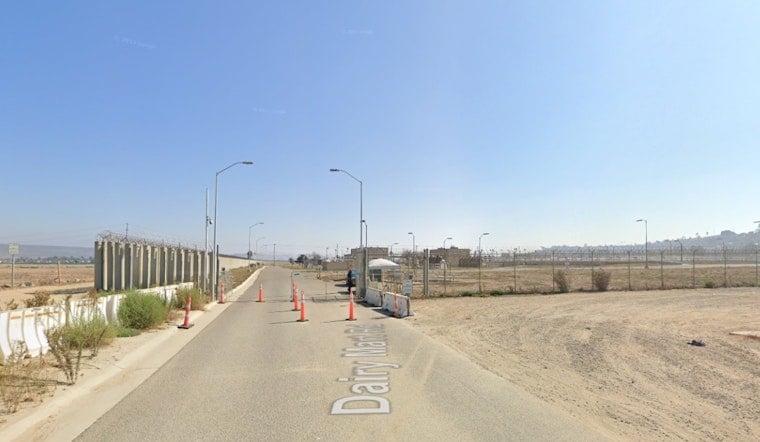
Federal officials have quietly signed off on another extension for Veolia Water West Operating Services Inc. at the South Bay International Wastewater Treatment Plant, approving a short-term, sole-source deal worth about $27.3 million. The bridge award is meant to keep staffing and controls in place through a transition period so treatment, and the plant’s treaty and permit obligations, do not lapse while the agency rewrites a longer-term contract.
The award notice on SAM.gov describes a fixed-price, non-competitive action worth roughly $27.29 million, with performance running from April 1, 2026, through March 31, 2027, plus an optional extension to May 31, 2027. The listing names Veolia Water West Operating Services Inc. as the awardee and labels the deal a short-duration bridge contract meant to keep operations steady while officials complete corrective work on a longer procurement, according to SAM.gov.
A formal Determination & Findings shows the U.S. Section of the International Boundary and Water Commission relied on FAR 6.302-1, the provision that allows using only one responsible source, after canceling a previous solicitation over material defects in the Performance Work Statement and an undisclosed organizational conflict of interest. The document says the bridge award is needed to avoid immediate environmental, public-health, regulatory and treaty-compliance impacts if plant operations were interrupted, according to the Determination & Findings included with the award files at GovTribe.
The extension lands while the plant is still in the middle of an upgrade. Federal agencies fast-tracked a 10-MGD expansion last year that pushed treatment capacity from 25 million gallons per day to 35 MGD in an emergency 100-day sprint aimed at cutting dry-weather transboundary flows into the United States. The International Boundary and Water Commission and federal partners highlighted that accelerated work as a stopgap while a broader rehabilitation program moves ahead, according to the International Boundary and Water Commission.
Locally, the decision is likely to hit a nerve. South Bay residents and nearby cities have long blamed cross-border sewage and plant performance for repeated beach closures, foul odors and health complaints. Imperial Beach homeowners filed a class-action in September 2024 seeking more than $300 million, and the Coronado Unified School District later sued Veolia and a former plant manager, accusing them of negligent and reckless operation, according to reporting and court filings cited by the Los Angeles Times.
Veolia has rejected those legal claims and defended its work at the border facility. “We strongly reject these accusations and will fight them vigorously because they are baseless,” Mayra Jimenez, Veolia’s communications and community relations manager for the West region, said, and the company has elsewhere described the complaints as meritless, according to inewsource.
Acquisition records repeatedly stress that the Veolia deal is a bridge contract meant to hold operations steady while procurement officials fix problems with the earlier solicitation and reissue a fully competitive bid for a multi-year operator. The approach is intended to avoid a messy contractor turnover at a 24/7 treatment plant that federal officials view as critical infrastructure, according to the award notice and related acquisition documents on SAM.gov.
Legal implications
Any long-term operator that follows Veolia will step straight into a legal minefield. Court records show that Coronado Unified’s complaint names Veolia and a former manager and seeks to hold plant operators responsible for alleged health and nuisance impacts tied to sewage problems, according to filings summarized on Justia Dockets.
The Performance Work Statement for the operations and maintenance contract spells out that the contractor’s job is to support permit compliance while the U.S. Section of the International Boundary and Water Commission keeps legal responsibility for the facility. That division of roles could shape both liability and how the next contract is written, according to the Performance Work Statement available through GovTribe.
What comes next
Behind the scenes, the IBWC has already signed contracts for a major rehabilitation and expansion program that officials describe as roughly a $600 million effort to increase the plant’s capacity and reliability. Design-and-construction documents outline phased work that is supposed to keep the plant running during upgrades and line up with the eventual long-term operations and maintenance deal, according to International Boundary and Water Commission contract records.
For people living in the South Bay, the stakes remain straightforward. They need uninterrupted treatment, but many also want clearer answers about who is responsible and tougher oversight of whoever runs the plant. Federal officials say this bridge award keeps critical operations from wobbling while the agency repairs its procurement process and moves toward an open competition for the next contract, a step that community members and lawyers alike are almost certain to scrutinize closely, according to the San Diego Union-Tribune.





