

























































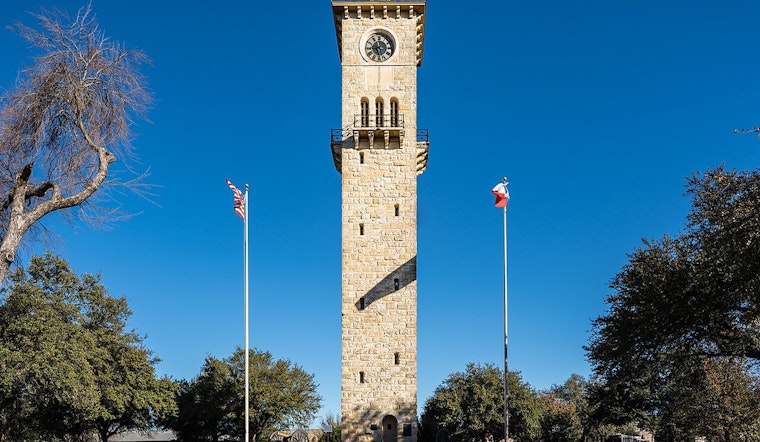
The quiet handoff of a cavalry sword at Fort Sam Houston on Friday was more than just another change-of-command ceremony. It marked the final time U.S. Army North will switch leaders in San Antonio, closing out a decades-long chapter in the city’s military story as the Pentagon reshapes its footprint and folds Army North and Army South into a single, four-star U.S. Army Western Hemisphere Command headquartered in North Carolina.
Change at Fort Sam
According to photos and captions posted by DVIDS, Brig. Gen. Jerry E. Baird Jr. formally took command of Task Force 51 on Friday morning at the Fort Sam Houston Quadrangle. The images document the moment Baird stepped in after the retirement of outgoing commander Maj. Gen. Scott M. Sherman and show the ceremonial saber exchange that signals a transfer of authority, underscoring that this was the last such command change for Army North in San Antonio.
More than 200 people turned out for the Fort Sam ceremony, where the 323rd Army Band played the West Point anthem and speakers leaned into the sense that an era was ending. The San Antonio Express-News reported that Army North is expected to formally case its colors this summer, with Sherman retiring as part of the broader consolidation ordered by Defense Secretary Pete Hegseth. The paper provided on-the-ground coverage of the final gathering.
What the New Command Means
This local change follows the Army’s December activation of the U.S. Army Western Hemisphere Command at Fort Bragg, where Forces Command, Army North and Army South are being brought under one theater-level headquarters, according to Army.mil. The Army has said the new command will reach initial operating capability on a conditions-based timeline and could be fully operational by summer, taking on responsibility for homeland defense, crisis response and regional security cooperation.
Reporting from Stars & Stripes notes that most headquarters functions are expected to shift to Fort Bragg, with civilian staff moves projected to wrap up by the end of 2026 and soldier relocations targeted for completion by September 2027. Planners intend to keep a forward-command presence at Joint Base San Antonio, though exact staffing levels and timelines for specific units are still being worked out.
Local Pushback and What Stays
San Antonio leaders did not simply watch this realignment unfold. Before the decision was finalized, U.S. Representatives Joaquin Castro, Greg Casar and Henry Cuellar sent letters to Defense Department officials arguing that San Antonio was the natural fit for the new command, as reported by the Houston Chronicle. City and civic leaders have emphasized the base’s long-standing ties to the local economy and warned that shifting headquarters roles could ripple through local businesses and military families alike.
At Friday’s ceremony, military leaders tried to clarify what is not changing. Brig. Gen. Baird told the crowd that Task Force 51 “will stay in San Antonio” and that he will serve as deputy commanding general for the homeland in the Western Hemisphere, adding, “I will be here,” according to the San Antonio Express-News. He described TF-51 as a proven contingency command focused on disaster response, a mission the Army intends to keep rooted in the city.
Why It Matters for San Antonio
Joint Base San Antonio remains a cornerstone of the region’s economy. A city report shows that JBSA supports tens of thousands of jobs and pumps billions of dollars into the area’s annual economic output, while other local reporting places total base employment well into the tens of thousands. Figures from the City of San Antonio and broader local coverage help explain why officials fought to keep headquarters duties in town: reductions in on-base staff through 2026 and 2027 could carry real-world consequences, from contracting opportunities to services that support military families.





.jpg)