

























































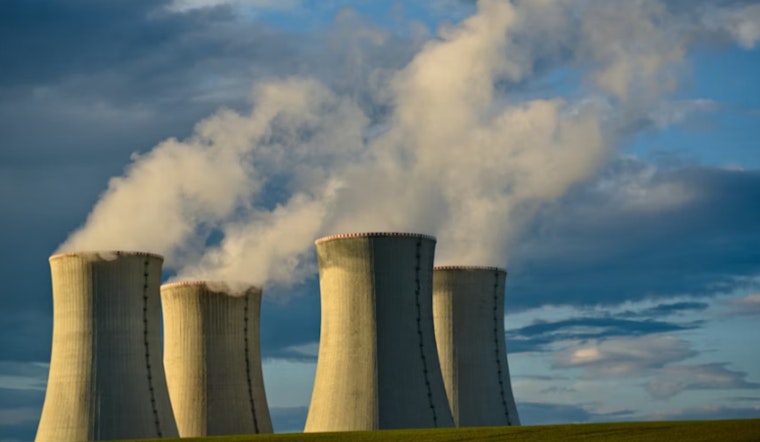
A Chevy Chase startup wants to build nuclear plants the way shipyards build tankers, and investors just put $380 million behind the idea. Blue Energy announced Tuesday that it has raised the cash to advance a plan to prefabricate large-scale power plants in shipyards and deliver them to sites by barge. The firm says moving most of the complex work off-site will shave years off construction schedules and help bring its first project online faster than traditional nuclear builds. Executives say construction on the initial Texas project could begin in the third quarter of 2026, with the plant eventually supplying as much as 1.5 gigawatts of power to big industrial customers such as AI data centers.
As first reported by Washington Business Journal, the round signals renewed investor appetite for new nuclear delivery models that promise predictable schedules and project-style financeability. The outlet noted that Blue Energy was founded in 2023 and is pitching a turnkey product to investors and utilities that want reliable baseload power without the cost overruns that have plagued recent plants.
Shipyard fabrication and barged delivery
Blue Energy is betting on centralized, shipyard-style manufacturing instead of traditional on-site construction, a strategy CEO Jake Jurewicz says echoes long-standing naval and LNG construction practices. As reported by TechCrunch, the company plans to finish large modules in existing fabrication yards and move them by water to the installation site. The company argues that this approach will cut schedule risk and make projects easier to finance.
Regulatory milestone: a 'natural-gas bridge'
Blue Energy says the Nuclear Regulatory Commission has approved a topical licensing methodology that allows the company to energize non-nuclear systems, effectively using natural gas to bring a site online while nuclear components complete licensing and installation, according to Blue Energy. The company argues that the NRC nod could shrink time-to-power to roughly 36–48 months by letting non-safety-significant infrastructure and commercial operations proceed in parallel with nuclear buildout.
The financing was led by VXI Capital with backing from Engine Ventures, At One Ventures and Tamarack Global, and the proceeds will be used for long-lead equipment procurement, project development and corporate growth, the company said in a press release. In that release, Blue Energy CEO Jake Jurewicz called the funding a milestone for making new nuclear “deployable, predictable, and financeable,” and VXI's managing director described the plan as a way to “rewrite the playbook” for nuclear, as reported by PR Newswire.
Company disclosures and reporting tie the first project to a Port of Victoria, Texas, site and to a planned power agreement with data-center developer Crusoe. Bloomberg reported those arrangements, noting the plant would initially use natural-gas generation to serve the campus while Blue Energy phases in nuclear capacity.
Blue Energy says it stems from MIT's Nuclear Science & Engineering Department and was founded in 2023, part of a wave of startups pitching factory-style delivery rather than new reactor designs. The development comes as regulators and developers are moving ahead on a handful of major nuclear projects, a trend underscored by the NRC's recent construction permit for a separate commercial reactor, which has raised hopes that novel delivery models may finally attract larger pools of private capital, AP reported.
Blue Energy says it expects to break ground on the Texas plant in the third quarter of 2026, a timeline that investors and regulators will watch closely as the company attempts to prove that factory-built nuclear can be both fast and bankable, according to PR Newswire. Whether the model scales will hinge on supply-chain execution, regulatory follow-through and the willingness of large customers to sign long-term offtake deals.





