

























































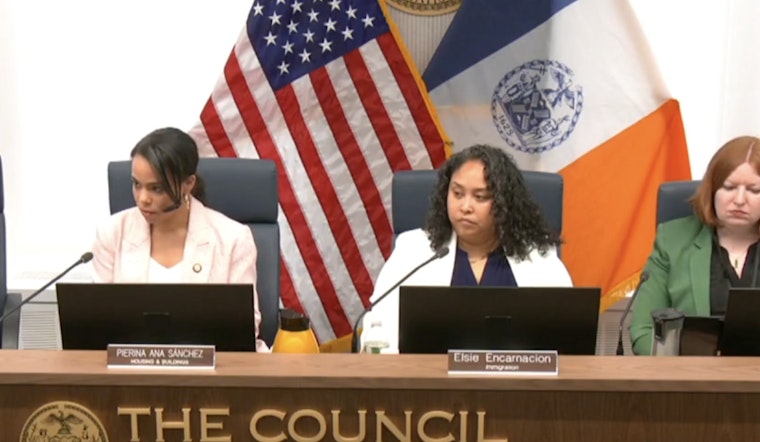
The City Council’s Committee on Immigration spent Monday drilling into allegations that immigrant tenants across New York City are being pushed out of their homes through harassment, and whether one of the city’s key tools to stop that pattern is strong enough to keep up.
At an oversight hearing on tenant harassment and the city’s Certification of No Harassment program, council members pressed city agencies and tenant advocates on how complaints are being tracked and whether a temporary pilot should become a permanent fixture of housing enforcement. Advocates say harassment, including threats, aggressive buyout offers and illegal evictions, is still a go to tactic for some landlords looking to clear immigrant families out of long standing neighborhoods.
Tenant Harassment against Immigrants and the Certification of No Harassment Program (live) https://x.com/i/status/2046247661402284189
— New York City Council (@nyccouncil) Apr 20, 2026
Council agenda and proposed law
According to the City Council, the committee’s agenda featured an oversight item, T2026-1582, paired with a proposed Local Law, City Council, that would lock the Certification of No Harassment pilot into permanent law and expand which buildings get swept into the program. The measure is listed as a joint bill with the Council’s Committee on Housing and Buildings.
How the Certification of No Harassment works
HPD runs the Certification of No Harassment program, which requires owners of certain distressed or previously harassed properties to prove there has been no tenant harassment before the Department of Buildings signs off on demolition or major renovation permits. The criteria include buildings with full vacate orders, properties that had a discharged 7 A administrator, court findings of harassment and a Building Qualification Index flagging buildings as distressed.
Advocates push for permanence
Tenant groups and housing advocates, including the Coalition Against Tenant Harassment and the Association for Neighborhood and Housing Development, have argued that the program should apply citywide as a key tool to slow displacement. In a City Council release, Council Member Brad Lander said that “protecting tenants from bad actors who use harassment as a tool for displacement is more critical than ever.”
Legal implications
The proposed tweaks would tighten what HPD must look at when reviewing applications and would explicitly fold unlawful evictions into the legal definition of harassment, which could make more property owners ineligible for a Certification of No Harassment. Existing law already allows a denial or rescission of a certification to count as a finding of harassment; in those cases, courts may award statutory damages and attorneys’ fees to affected tenants, according to the City Council.
What’s next
The hearing marked an early public step in the Council’s debate over whether to cement the pilot as permanent policy. Sponsors signaled they plan to keep pressing HPD for updated enforcement figures as they weigh the bill. The oversight session was scheduled for April 20 on the Council calendar and was highlighted on the local housing calendar by outlets such as City Limits, a sign of how immigrant tenant protections have moved into the spotlight in this month’s city housing fights.





