

























































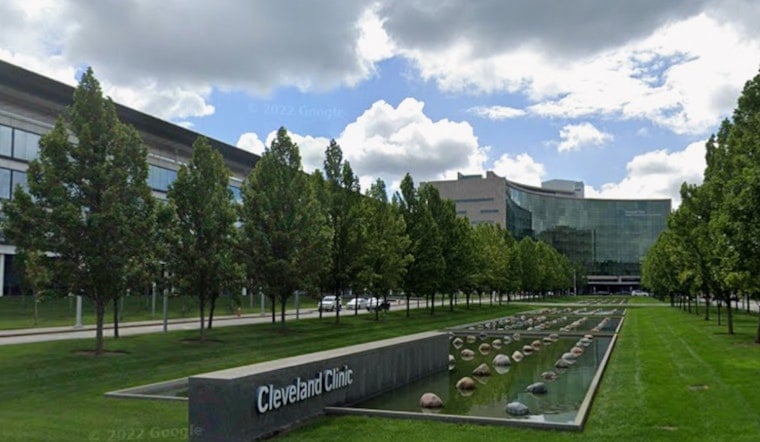
Cleveland Clinic’s on-campus quantum computer is no longer just a flashy showpiece in the drug-discovery race. Researchers say the system now runs roughly ten times faster than its previous configuration, a speed jump that could let teams test chemical behavior at scales that standard supercomputers have struggled to touch. The upgrade is already reshaping local research partnerships and degree programs that aim to turn out the next wave of quantum-savvy scientists.
As reported by WKYC, the Clinic’s quantum cluster has been receiving continuous upgrades from IBM, and engineers say those changes produced the tenfold performance boost. Teams are already using the setup to study photon-activated cancer drugs and other chemistry problems that classical systems struggle to model. Cleveland Clinic research chief Dr. Lara Jehi told the station the shift feels irreversible: “Get on it or fix it, but you can't stop it. The world never goes back.”
Wellcome Leap Prize Validates Practical Path
The momentum got a public stamp of approval when Wellcome Leap awarded a $2 million prize under its Quantum for Bio program to a multidisciplinary team led by Algorithmiq, with Cleveland Clinic providing biological expertise. Wellcome Leap describes the award as part of a broader $50 million challenge aimed at pushing quantum tools into real-world biomedical problems.
Algorithmiq reports that the winning project carried out hybrid quantum-classical experiments on IBM hardware at scales approaching 100 qubits, in order to model excitation pathways used in photodynamic cancer therapy. In plain terms, they are testing how light-triggered drugs move energy around inside molecules, using quantum gear to tackle the nastiest parts of the math.
Quantum-Classical Workflows Already Moving The Needle
IBM and Cleveland Clinic researchers are pitching this work as a preview of “quantum-centric supercomputing,” a model where quantum processors grab the hardest chunks of a problem and then hand stitched results to GPU and CPU clusters that finish the full molecular picture. It is not about throwing out classical machines, it is about giving them a quantum sidekick.
In a technical write-up, the collaborators detailed a hybrid workflow that simulated the 303-atom mini-protein Trp-cage, a long-standing chemistry benchmark that shows how quantum and classical tools can team up on large-molecule simulations. IBM Quantum says the reference architecture coordinates quantum processing units, GPUs, and CPUs so that those hybrid calculations can scale beyond one-off demonstrations.
Degrees, Internships And A Local Talent Pipeline
This hardware push comes with an education play baked in. Cleveland Clinic and Miami University have rolled out a partnership to build specialized bachelor’s, master’s, and doctoral programs in quantum computing with life-science tracks, along with internship access to Clinic systems. The idea is that students do not just learn the theory, they actually log time on the same infrastructure that researchers are using.
Miami’s new Bachelor of Science in Quantum Computing is designed to include co-op and internship opportunities that plug students directly into the Cleveland Clinic’s research environment, officials say. Cleveland Clinic and Miami University describe the collaboration as a regional pipeline designed to keep talent and early-stage companies rooted in the area instead of watching them drift to the coasts.
What To Watch Next
The local quantum push will be front and center at Cleveland Clinic’s Discovery & Innovation Forum on June 15, 2026, where organizers say policymakers, industry leaders, and researchers will gather to talk AI, quantum, and drug discovery in the same breath. A state representative has already been announced as a panelist, a sign that Columbus is paying attention to what is happening in the labs.
Ohio House posted details about the forum and invited regional leaders to take part, pitching it as a chance for the state’s power brokers and scientists to compare notes on where this technology is heading.
Experts caution that the results so far are early and tightly focused on specific domains, and that hybrid quantum-classical methods are the pragmatic route to useful chemistry simulations for now rather than an overnight replacement for classical supercomputers. Still, between the Clinic’s speed upgrade, the Wellcome Leap award, and the emerging education pipeline, Cleveland has quietly become one of the clearest places to watch whether quantum computing can start to deliver clinically relevant results instead of just buzzwords.





