

























































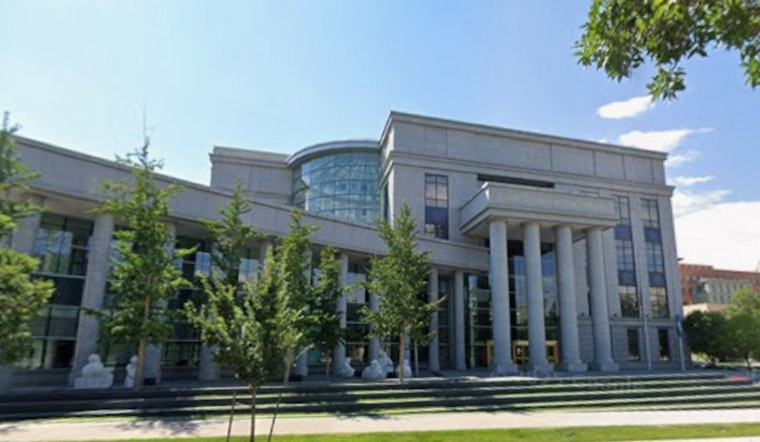
A Colorado Court of Appeals panel has shut down an attempt by six counties to challenge a 2023 state law that blocks state and local governments from signing or renewing contracts to hold people for federal civil immigration purposes. In a unanimous ruling Thursday, the panel left intact a statute designed to keep state and local authorities out of business with privately run immigration-detention operations. The original lawsuit came from Douglas, El Paso, Mesa, Rio Blanco, Elbert, and Garfield counties, along with several elected sheriffs.
Appeals court affirms lower-court dismissal
The Court of Appeals Division IV, in an opinion by Judge Timothy J. Schutz, agreed with a Denver district court that the counties had not shown a legally protected injury and therefore lacked standing to sue. According to the opinion from the Colorado Judicial Branch, the panel concluded that the state constitution gives the General Assembly wide discretion to define what services counties may provide and to restrict their authority to contract with federal agencies or private detention operators.
What the law bans
House Bill 23-1100, passed in 2023, bars state and local governments from entering into or renewing immigration-detention agreements, selling public land for new private detention centers, or offering financial incentives to private detention companies. It also ordered that any existing immigration-detention contracts end by Jan. 1, 2024. As described by the Colorado General Assembly, the law still allows governments to provide basic services such as health care and sanitation for detainees. The fight also touched a 2019 statute, codified in HB19-1124, that prohibits holding someone solely on a civil immigration detainer, as set out by the Colorado General Assembly.
Counties argued, courts disagreed
Douglas County told the courts it had been harmed because the 2023 law allegedly stripped it of the right to voluntarily contract with the federal government. The appellate panel brushed that aside. The opinion delivered a curt response - “The County is mistaken,” Judge Schutz wrote - and went on to explain that counties do not have an unrestricted right to contract when the legislature has chosen to limit that power.
The lawsuit initially listed six counties and several sheriffs as plaintiffs. By the time the case reached the appellate stage, only Douglas County and its sheriff stayed in the fight, according to the Denver Gazette.
Legal implications
Because the courts found no concrete injury, the ruling tightens the standard for when local governments can even get in the courthouse door to challenge statewide laws, putting the spotlight on standing as a threshold hurdle. Functionally, HB23-1100 stays fully in force unless the Colorado Supreme Court or the legislature decides otherwise, leaving counties to fight this one in the political arena rather than through this particular lawsuit.
The opinion also leans on earlier appellate decisions holding that federal immigration detainer requests do not require state or local cooperation. That undercuts one of the counties’ key preemption arguments and reinforces the idea that Colorado can choose how much it wants to participate in civil immigration enforcement.
County reaction and next steps
Douglas County officials cast the case as a public-safety push, arguing that the laws “prevent local governments from working with ICE” and put communities at risk, according to a county news release. County leaders have signaled they are not done, legally or politically. After losing in the Court of Appeals, asking the Colorado Supreme Court to review the case looks like the most obvious next move.
In the meantime, sheriffs and local officials are stuck operating under the limits set by the 2019 and 2023 laws, unless lawmakers rewrite the rules or the state’s highest court steps in and sees things differently.
Bottom line
The Court of Appeals’ unanimous decision keeps Colorado on its current course away from local involvement in civil immigration detention and highlights how hard it is to overturn a statute without a clear, legally recognizable injury. Anyone hoping to change that course now has two main avenues: convince the legislature or persuade the Colorado Supreme Court to take a second look.




