

























































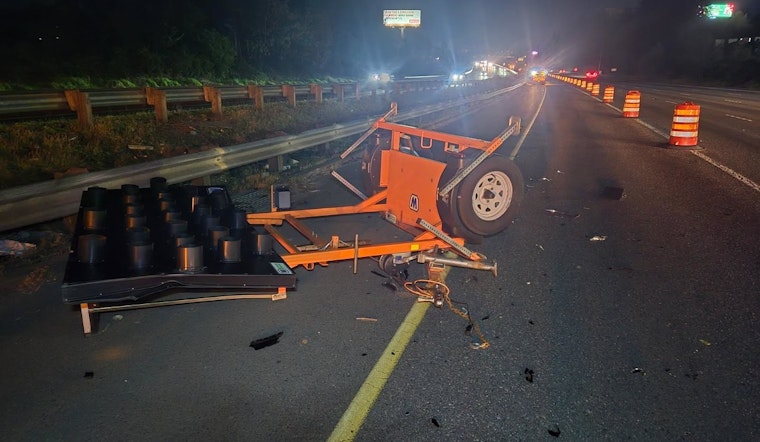
Southbound traffic on Interstate 5 in Fife got an unwelcome sideshow over the weekend when a driver plowed into a large flashing arrow board in an active work zone, then bolted from the scene before being arrested. Crews had been installing a 3,500-pound overhead electronic sign at the time of the crash. Authorities later arrested the driver on suspicion of driving under the influence, and initial testing reportedly showed a blood-alcohol level roughly twice Washington’s legal limit. No workers were hurt, but transportation officials warned that a single hit to heavy equipment can mean long backup times and serious hazards for the people working just feet from live traffic.
Local TV coverage first brought the incident to wider attention, describing how the driver slammed into the arrow board while crews were working, then took off on foot before being caught. The station also cited agency statements confirming that no workers were injured. As reported by KIRO 7, law enforcement made an arrest at the scene.
Work-zone Cameras Cut Speeding Near JBLM
State transportation officials say the Fife crash is a textbook example of why they are leaning harder on work-zone enforcement. Before cameras were deployed on I-5 near Joint Base Lewis-McChord, more than 60% of drivers were speeding through the work zone. During active enforcement, that share has dropped to as low as 30%, according to WSDOT. The agency rotates mobile camera trailers through different construction and maintenance sites instead of parking them in one permanent spot, a setup officials say helps focus on the most high-risk stretches.
Fines, Expansion and Where the Cameras Go Next
Officials plan to add more mobile units across central and eastern Washington as the work-zone camera program expands, and recent coverage indicates the small fleet could be stretched to cover additional busy corridors. Drivers who receive notices can pay, contest, or request a hearing through waworkzonespeedcameras.gov, and a recent rundown of the rollout is available in “slow down or pay up”.
Legal Consequences
The driver in the Fife incident now faces suspected DUI charges after law enforcement reported a blood-alcohol level about twice the legal limit, according to KIRO 7. By contrast, work-zone speed camera notices are handled as civil infractions through an administrative process. Washington State Patrol materials state that program revenue goes toward safety efforts, and the pilot program changes the first infraction to a $125 penalty effective July 1, 2026.
WSDOT is urging drivers to slow down near road crews and treat every work zone as a high-risk stretch where people and heavy machinery sit just off the travel lanes. Between the cameras, the warning signs, and stepped-up penalties, state officials are betting that tougher enforcement will cut down on speeding and help prevent the kind of work-zone crash that played out in Fife.





