

























































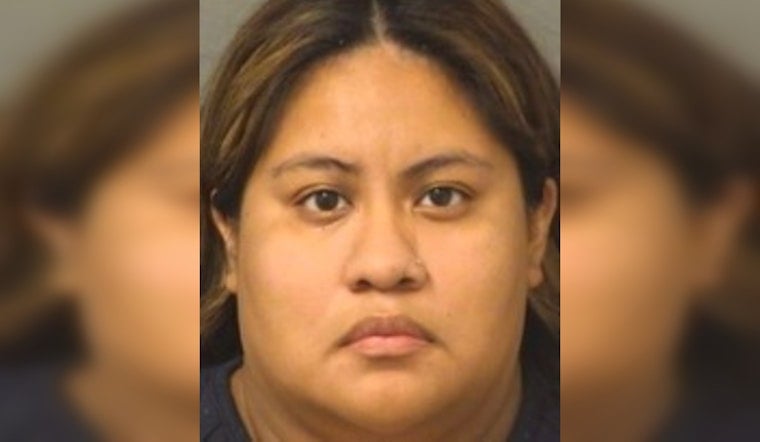
Investigators say a West Palm Beach caregiver turned a 79-year-old client’s bank accounts into her personal travel and shopping fund, draining more than $79,000 before detectives stepped in. The spending trail, according to authorities, ran through unauthorized ATM withdrawals, credit card charges and a flurry of checks, and ultimately ended with the caregiver in handcuffs on Friday.
Detectives told reporters that bank records and surveillance footage showed a pattern they could not ignore, tying the caregiver to transactions that had little to do with elder care and everything to do with personal perks. That combination of paper trail and video, investigators say, led directly to her arrest.
According to CBS12, the Palm Beach County Sheriff’s Office says 27-year-old Marta Cisneros was booked on charges that include exploitation of an elderly person and using a false identity. Investigators told the outlet they documented nearly 50 unauthorized ATM withdrawals totaling more than $30,000, along with dozens of checks written to or cashed by Cisneros and relatives.
The alleged spree did not stop there. Authorities say the accounts were also hit with fraudulent charges for everything from gift cards and food delivery to a roughly $750 Starbucks bill and a cabana rental at Rapids Water Park. The disputed activity reportedly stretched from July 2024 through June 2025 and included charges that American Express flagged as suspicious.
How Florida law treats exploitation
Florida law takes financial exploitation of older or disabled adults seriously, and the penalties climb quickly as the dollar figures rise. As outlined by the Florida Senate, cases involving $10,000 to $50,000 can trigger enhanced felony exposure, while losses of $50,000 or more can be charged at a higher degree with substantially steeper potential punishment.
That structure helps explain why investigators often stack exploitation counts alongside identity fraud or theft charges in caregiver cases, especially when the alleged losses cross the upper thresholds lawmakers have built into the statute.
Investigation and the suspect's response
Detectives told CBS12 that bank records, surveillance video and witness statements tied many of the questionable transactions to Cisneros and people close to her. Authorities say the unauthorized ATM withdrawals alone topped $30,000, and that dozens of checks were written or cashed in ways that benefited Cisneros and relatives.
Cisneros has pushed back on the allegations. In a December 2025 phone interview, she told reporters she had permission to use the victim’s card, disputing investigators’ characterization of the spending as theft or exploitation.
Why this matters beyond one case
Financial exploitation of older adults rarely happens in a vacuum, and cases like this tend to echo broader national concerns. Many incidents involve someone in a position of trust, such as a caregiver, relative or advisor, who has easy access to money and personal information.
The U.S. Department of Justice highlights elder financial abuse as a priority and has cited hundreds of enforcement actions in recent years that target schemes ranging from individual caregivers to large-scale fraud operations. State-level reporting in Florida also shows thousands of suspected exploitation reports flowing into abuse hotlines, a volume that has helped spur banks and lawmakers to promote tools like trusted-contact designations in an effort to head off problems before they snowball.
What happens next
Cisneros was arrested in West Palm Beach and booked into the Palm Beach County jail. The 15th Judicial Circuit State Attorney’s Office will now review the case file and decide whether to move forward with formal charges based on the sheriff’s investigation.
If prosecutors file and secure convictions, Florida law allows for prison sentences, fines and restitution orders, and judges can bar defendants from working with vulnerable adults in the future. Officials say anyone who suspects that an older or disabled person is being financially exploited should contact local law enforcement or call Florida’s abuse hotline at the Department of Children and Families.





