

























































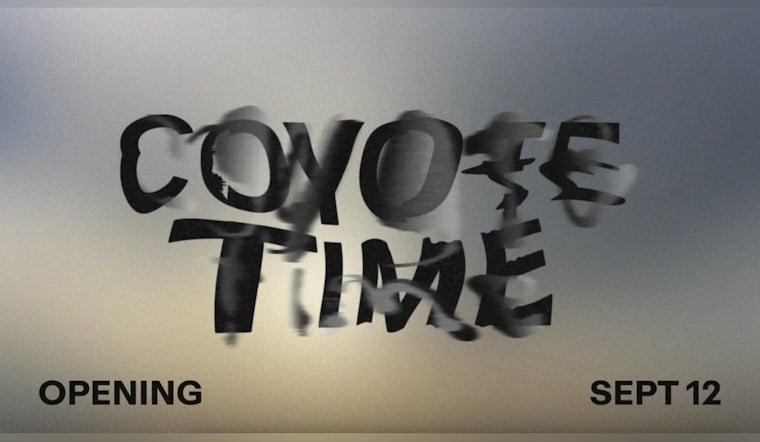
Coyote Time is coming for the St. Louis riverfront, and it is not sneaking in quietly. Counterpublic, the St. Louis-based triennial that folds large-scale art into everyday city life, has announced a citywide exhibition set to open Sept. 12 and run for three months. Roughly fifty new commissions and historical reinterpretations are slated to land along the riverfront, in neighborhood blocks, and at institutional sites stretching from Tower Grove to The Ville. Organizers say the work will lean hard into civic and social questions, with climate, immigration and Indigenous sovereignty at the center of the conversation.
Collectively curated by Jordan Carter, Raphael Fonseca, Stefanie Hessler, Nora N. Khan and Wanda Nanibush, Coyote Time is billed as Counterpublic’s third triennial and will feature about fifty artist commissions alongside a full slate of public programs. The exhibition announcement highlights five anchor sites: the Mississippi Riverfront, The Ville, Tower Grove, the International Institute and the National Building Arts Center, with institutional partners that include the Pulitzer Arts Foundation and the Saint Louis Art Museum. These details are outlined by Counterpublic.
The artist lineup pairs international heavy hitters with projects rooted in local neighborhoods. Counterpublic’s roster lists Glenn Ligon, Rebecca Belmore, Petrit Halilaj, Rirkrit Tiravanija and St. Louis groups such as People’s Art and Recreation Center. Local reporting notes that Ligon and Belmore will debut newly commissioned works around the riverfront, while Timmy Simonds will develop a series tied to Sumner High School in The Ville. Organizers are also planning an artist launch party for April 23 at The Garage, with performances by DJ Nyara and Sir Eddie C., part of a broader push for community-centered programming, as reported by St. Louis Public Radio.
Where the work will land
The Mississippi Riverfront is set to be the main stage, with more than a dozen new pieces designed to reframe how the city sees and uses its waterfront. Across the river in Sauget, Illinois, the National Building Arts Center and its NON STNDRD program will take on large-scale projects focused on climate. Over at the International Institute site, artists will center stories of migration, belonging and temporary refuge. These anchor sites and institutional partnerships are described on the exhibition’s official page by Counterpublic.
Indigenous stewardship and sustainability
Counterpublic is also foregrounding Indigenous stewardship. The organization emphasizes land recognition and says it helped steward the rematriation of Sugarloaf Mound to the Osage Nation in 2024, framing that transfer as part of a broader land back effort connected to the exhibition. Organizers plan to publish a climate impact report at the close of the triennial to account for environmental costs and benefits of the project. Those moves, and the story of the mound’s transfer, were detailed in reporting by St. Louis Public Radio.
What to watch
In the months leading up to September, organizers say to expect a steady drip of site announcements, artist residencies and community programs as the installations take shape. If their visitor projections hold, Coyote Time could funnel sustained attention and hundreds of thousands of visits into neighborhoods that rarely see that level of public investment. The open question is whether this high-profile art surge can translate into long-term benefit for the communities at its center once the triennial wraps.





