

























































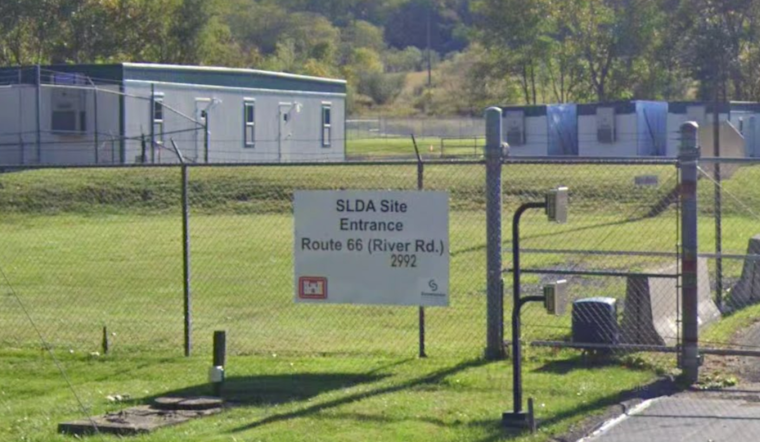
After years of planning, lawsuits, and neighborhood anxiety, the Shallow Land Disposal Area near Apollo is finally being opened up. Massive excavators rolled to the fence line this week as the Army Corps began cutting into one of Western Pennsylvania’s most infamous Cold War-era nuclear dumps. The 44-acre site holds 10 shallow trenches where drums and contaminated soil were buried decades ago, and crews are now set to peel back that history in small, tightly controlled stages. For neighbors who watched a 2011 cleanup stall when unexpected material turned up, the fresh round of digging is equal parts relief and renewed worry.
According to the U.S. Army Corps of Engineers, active excavation began on April 7 at the SLDA site at 2992 River Road in Vandergrift, starting with the removal of topsoil above Trench 8. Officials say the work will move in a slow, methodical way, with continuous environmental monitoring and on-site security as crews evaluate whatever they dig up. The Corps has invited residents to a May 6 information session to talk through traffic, monitoring, and safety as the project ramps up.
"We're beginning active remediation," Col. Nicholas Melin told local reporters, describing crews carefully shaving off soil in measured slices that will be tested, bagged, and loaded into heavy-metal containers before leaving the property. As reported by CBS Pittsburgh, Melin said workers will remove material in roughly six-inch layers and that active removal could take about six to eight years. He added that more than $400 million has already gone into preparing the site. Corps leaders also told reporters the project will rely on trench enclosures, perimeter air monitoring, and an on-site water treatment plant to protect workers and nearby residents.
How the waste will travel
As outlined by the U.S. Army Corps of Engineers, excavated material will be placed into large intermodal containers (IMCs), sealed on-site, and moved by truck to a rail staging area before long-distance shipment to a licensed disposal facility. The administrative record and public comments note that earlier work at the SLDA used Wampum, Pennsylvania, as a transload point where sealed IMCs were shifted onto flatbed rail cars for transport.
Cost and expectations
Public filings and agency documents show this cleanup has already been pricey before the main digging even began. BWXT's SEC filings describe a proposed Record of Decision amendment that anticipates a remediation cost in the mid-hundreds of millions of dollars, with tens of millions already spent on site preparation. Those filings also sketch out the legal and financial backdrop shaping the project timeline, helping explain the years of design work, security planning, and monitoring that led up to the current excavation phase.
Legal history and local reaction
The dump has sat at the center of litigation and public controversy for decades, complicated by ownership and indemnity agreements involving NUMEC, ARCO, and later Babcock & Wilcox (now BWXT). Those arrangements have long raised the question of who ultimately foots the cleanup bill. Skepticism in nearby neighborhoods has not gone away. "If they're going to spend that money, they should have just bought the whole village," one resident told CBS Pittsburgh. Local officials and Corps representatives say monitoring data will be shared and that regulatory oversight will cover every shipment and step in the process.
What neighbors should expect
The Corps says residents should brace for more truck traffic, heavy equipment, and workers in the coming months. Every sealed container, officials say, will be surveyed, tracked, and kept closed until it reaches a licensed facility. Continuous air and groundwater monitoring and an on-site water treatment system are intended to limit risk as material leaves the trenches. Project documents and monitoring results will be made available in the administrative record and at the Apollo Memorial Library, and Corps public affairs staff have provided phone and email contacts for questions. Officials emphasize that the work will move deliberately and under strict oversight, even if that means the cleanup remains a long, multi-year presence in the community.





