

























































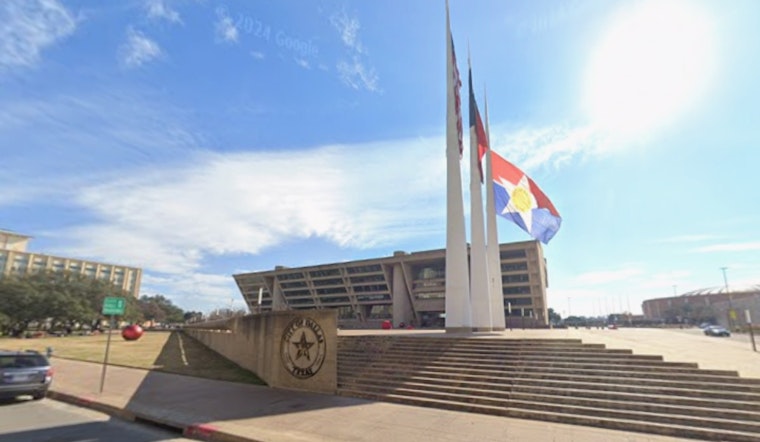
Donzell Gipson, a veteran City of Dallas executive who rose to assistant city manager, is retiring after more than 28 years at City Hall. Over nearly three decades, Gipson led the staff work behind high-profile assessments of the aging complex’s condition and oversaw key departments that manage facilities, real estate and procurement. His exit lands right in the middle of a high-stakes debate over whether to repair the downtown complex designed by I.M. Pei or move city operations somewhere else entirely.
"After 28+ years at the City, it is my time for new adventures in life," Gipson told The Dallas Morning News in a text message. According to that report, he filed his retirement paperwork in December 2025 and submitted his notice of intent to retire in January 2026. The paper also notes he was promoted to interim assistant city manager in 2024 and made permanent in January 2025.
Gipson has been responsible for consolidating the city’s real estate division, revamping procurement services and supervising the civil service department, according to City of Dallas memos. Those documents also identify him as a liaison to council committees that have overseen facility planning and other major city projects.
He Led The City Hall Review
Gipson’s team helped produce the early cost estimates that kicked the public fight over City Hall’s future into high gear. Staff briefings in October pegged initial repairs between $152 million and $345 million. A later review led by the Economic Development Corporation put corrective repairs at roughly $329 million and projected full modernization costs between about $906 million and $1.1 billion over 20 years, according to a report by The Dallas Morning News.
Why His Departure Matters
The timing takes an experienced operational hand off the field just as elected officials and residents are demanding answers on what comes next. Public hearings have drawn hundreds of people, and a special meeting was scheduled to weigh options for the building’s future, as NBC 5 reported. Gipson’s retirement leaves the city manager’s office and council to figure out how to cover a sprawling portfolio while the City Hall debate rages on.
City memos show that Dallas has reshuffled assistant city manager duties before as priorities shifted, and the same internal process is expected to manage this transition. The bigger decision still hanging over downtown is whether to repair, modernize or relocate City Hall, and how to pay for it. That call will shape the heart of Dallas for years to come.



