

























































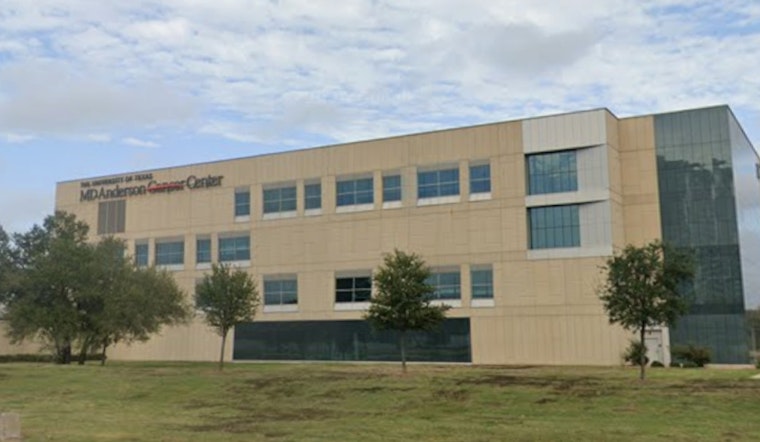
Houston’s MD Anderson Cancer Center just scored a serious boost in its war on cancer, thanks to a $10 million gift from Dallas philanthropists Carl and Peggy Sewell. The money jump-started the new Center for Cellular Language Intelligence, a research hub that will combine spatial biology, single-cell profiling and artificial intelligence to study how tumor cells and their neighbors "talk" to each other inside cancers. The goal is to turn those microscopic conversations into earlier detection, sharper prevention strategies and highly personalized treatments. Linghua Wang, a professor of genomic medicine at MD Anderson, will lead the center.
What the center will study
The University of Texas MD Anderson Cancer Center unveiled the center, along with the Sewells’ $10 million donation, in an April 28 news release. According to UT MD Anderson, the gift will fuel strategic hiring, laboratory and data infrastructure and cross-disciplinary efforts aimed at "decoding the biological language of intercellular interactions." The institution says the hub will fuse single-cell and spatial biology with AI tools to push basic discoveries more quickly into clinical trials.
Linghua Wang, M.D., Ph.D., will serve as executive director of the center and will lead efforts to coordinate computational and clinical teams across the MD Anderson campus. "We can now harness these tools to identify key drivers, biomarkers and therapeutic targets," Wang said in the release, according to UT MD Anderson. The center is set up as an institutional hub, working with the James P. Allison Institute, the Institute for Data Science in Oncology and MD Anderson’s translational programs to turn huge, complex datasets into concrete treatment strategies that can be tested in patients.
Why 'cellular language' matters
The center leans on cutting-edge methods that have surged in recent years: spatial multi-omics, multiplex imaging and AI-driven analysis that put molecular signals in their physical neighborhood. A recent review in Nature Reviews Molecular Cell Biology describes how these techniques illuminate tumor "neighborhoods" and immune interactions that influence how patients respond to therapy, findings the new center aims to turn into biomarkers and treatments.
Peggy and Carl Sewell, who chair Sewell Automotive in Dallas, have backed MD Anderson for more than forty years and helped establish named chairs and signature fundraising events, according to SMU. Reporting by the Houston Business Journal highlighted the Sewells’ $10 million gift and the center’s launch, noting the couple’s long record of civic involvement and fundraising.
MD Anderson said the Sewell donation will cover new hires, laboratory build-out and the computational backbone needed to move discoveries from bench to bedside at a quicker clip. For Houston-area patients, that could translate into biomarker discoveries arriving in clinical tests and trials sooner as the center ramps up.





