

























































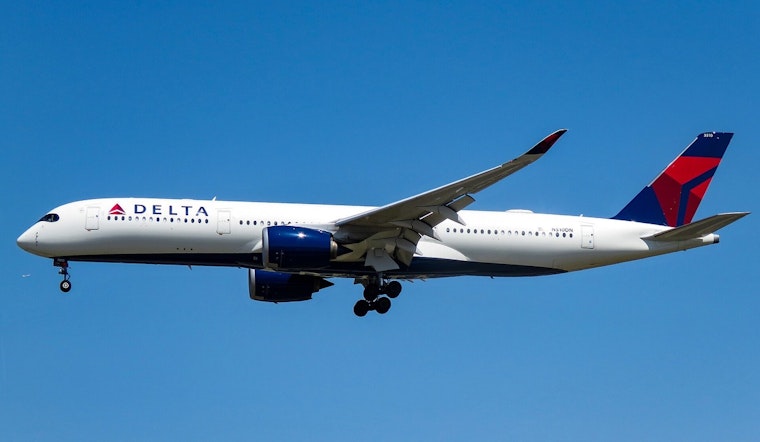
Delta Air Lines is turning its Atlanta TechOps campus into something much bigger than an in-house repair shop. The carrier is pushing its maintenance arm to stand on its own feet as a $5 billion business, positioning those cavernous hangars as a global supplier for other airlines and government customers. The blueprint leans on heavy investment in engine and component overhaul work and on contracts that already funnel outside fleets through Delta’s doors, with the added bonus that improvements in the shop are expected to feed reliability gains back into Delta’s own operation.
Delta’s $5 Billion MRO Play
The Atlanta Journal-Constitution reported that Delta plans to grow its third-party maintenance, repair and overhaul (MRO) operation to around $5 billion in annual revenue and has poured money into certified shops for CFM International, GE Aviation, Pratt & Whitney and Rolls-Royce. The paper also spotlighted Delta TechOps’ Rolls-Royce Trent engine shop on the Atlanta campus and, in a correction, noted that TechOps performs work for some U.S. Air Force aircraft, as reported by The Atlanta Journal-Constitution.
Inside The Numbers
Delta’s own filings show why executives think the move pencils out. The company’s 2025 Form 10-K lists operating revenue of about $63.4 billion and indicates that Delta TechOps generated roughly $822 million in revenue in 2025, up from $658 million the year before, according to the U.S. Securities and Exchange Commission. Delta’s investor materials add that the airline will start breaking out MRO expense from its non-fuel unit cost metric to keep that key gauge clear even as TechOps grows, per Delta Air Lines.
Customers, Contracts And Capacity
Trade coverage shows TechOps is already flexing beyond Delta’s own metal. Aviation Week Network reported that Delta recently inducted its first CFM LEAP-1B engine from Korean Air under a third-party contract, a clear sign the shop is taking on outside fleets, according to Aviation Week Network. In the MRO world, the fattest margins tend to live in engine overhauls and complex component repair, which helps explain why Delta sees room to scale the business significantly.
Workforce Squeeze And Other Risks
The biggest chokepoint is not hangar space, it is people. The Bureau of Labor Statistics projects employment of aircraft and avionics mechanics and technicians will grow about 5% from 2024 to 2034, with roughly 13,100 openings per year, according to the Bureau of Labor Statistics. Longer-range industry outlooks such as Boeing’s Pilot & Technician Outlook point to much larger multi-decade demand for technicians. That tightening labor market, combined with the capital intensity and certification hurdles that come with engine work, is one of the main limits on how fast any MRO provider can ramp up.
What’s Next For Atlanta
For Atlanta, the upside is straightforward: more commercial engine and component work could mean more hiring, more supplier deals and more high-skill jobs on the TechOps campus and across its local supply chain. Hitting a $5 billion run rate, though, will not happen on ambition alone. Delta will need a steady stream of contract wins, continued certification across additional engine types and a dependable pipeline of trained technicians. Those are the milestones the airline is flagging in its investor disclosures and public filings, per Delta Air Lines.





.jpg)