

























































SDG&E today rolled out a first-cut 145-mile corridor for the Golden Pacific Powerlink, a proposed 500-kilovolt transmission line that would run from the Imperial Valley to the San Diego-Orange County border and cross stretches of Anza-Borrego Desert State Park. The concept calls for towers as tall as a 15- to 20-story building and is already drawing sharp concern from conservation groups and tribal representatives. SDG&E says it will hold virtual open houses in mid-May as regulators and residents settle in for what is expected to be a months-long review.
What SDG&E Says The Project Will Do
SDG&E and its parent, Sempra, say the Golden Pacific Powerlink is meant to ease transmission congestion and move more renewable energy into Southern California, and the utility has begun circulating a preliminary route and fact sheet to communities along the route. According to SDG&E, the company would build, own and operate a new 500-kV line along a corridor that has already been flagged by state planners. Planning documents from the California Independent System Operator describe the Imperial Valley-North of SONGS 500-kV project as roughly 145 miles long and identify it as a major component of the 2022-2023 Transmission Plan.
Where The Line Would Run And Why Locals Are Alarmed
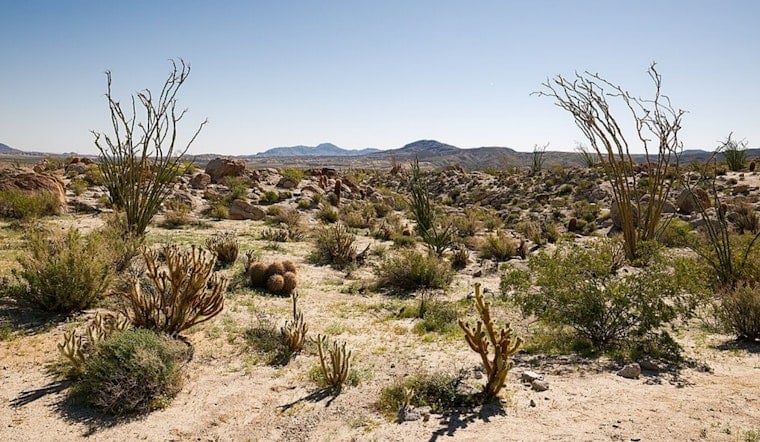
Local groups say the draft corridor cuts through the heart of Anza-Borrego Desert State Park, putting rare habitat and cultural resources in the crosshairs. The Anza-Borrego Foundation warns that the route would affect more than 20 miles of protected parkland and notes that 500-kV towers, which can reach about 150 to 200 feet in height, would dramatically change the park’s visual character. Other neighborhood and conservation organizations are raising alarms about potential harm to Peninsular bighorn sheep, sensitive Kumeyaay burial sites and a tourism economy that leans heavily on dark skies and wide-open desert views.
Timeline, Price Tag And Who Picks Up The Bill
Agency filings and planning materials outline a long runway for the project, with SDG&E indicating that construction could start around fall 2029 and that the line could enter service in the early 2030s. The CPUC stakeholder documents and CAISO planning materials both point to multi-billion-dollar cost estimates and ask SDG&E to flesh out the utility’s current range of $1.3 billion to $2.2 billion. Industry coverage also notes that, under present assumptions, SDG&E customers could be on the hook for roughly nine percent of the project’s cost, with the rest spread across other ratepayers.
Alternatives On The Table And Local Pushback
Opponents and some technical critics argue that the utility should first chase less intrusive fixes, such as re-rating or double-circuiting existing corridors, adding more local storage or leaning harder on distributed generation, before signing off on a new long-haul route. Bill Powers and the Protect Our Communities Foundation have urged regulators to evaluate upgrades and distributed alternatives and to test whether local resources could reduce or eliminate the need for a multi-billion-dollar 500-kV corridor.
What Happens Next In The Powerlink Fight
SDG&E has opened a stakeholder comment period and scheduled virtual open houses at noon and 5:30 PM on May 12 and May 14, as it fine-tunes potential routing ahead of a formal CPUC application later this year. The Anza-Borrego Foundation notes that in-person hearings, federal and state environmental reviews and tribal consultations will follow, and that a CPUC decision is unlikely for several years. In the meantime, tribes, conservation groups and local governments have a window to file formal comments and push for route changes or entirely different approaches.
Key Legal And Regulatory Fights To Watch
Beyond environmental and cultural flashpoints, the project is set to trigger a stack of technical and safety reviews across multiple agencies. The FAA will review potential obstruction hazards and could require red lights on towers that meet its criteria, while the CPUC will dig into cost allocation, safety and the broader public interest as part of its certificate review. The FAA’s obstruction guidance, Advisory Circular AC 70/7460-1, lays out when structures must be marked or lighted to protect navigable airspace. At the same time, recent CPUC deliberations about utility financing, including a proposed return-on-equity figure near 9.88 percent in cost-of-capital proceedings, highlight how financing terms and rate impacts could weigh on the commission’s final call.
For a detailed map and on-the-ground reaction, see coverage from The San Diego Union-Tribune. SDG&E’s project materials and fact sheet are available on the utility’s Golden Pacific project site.





