

























































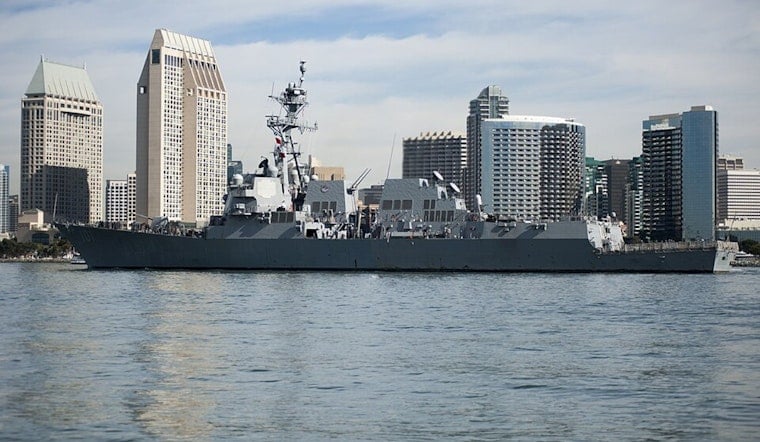
A San Diego-based U.S. Navy destroyer helped turn back a sanctioned tanker in the Arabian Sea yesterday, ordering the vessel to quit international shipping lanes and head toward Iranian waters under American escort. The merchant ship, identified as the M/V Sevan, complied and began sailing back under watch. It is the latest flex of naval muscle in a broader effort to choke off Iran’s so-called "shadow fleet" and its covert energy shipments.
According to Times of San Diego, U.S. Central Command said a helicopter operating from the guided-missile destroyer USS Pinckney (DDG-91) closed in on the Sevan and ordered the crew to reverse course. CENTCOM stated that the merchant vessel is currently complying with U.S. military direction to turn back to Iran under escort, language that quickly echoed through local and national coverage. The outlet also published a CENTCOM photo showing the San Diego-based destroyer alongside the intercepted tanker in the Arabian Sea.
The move came just one day after the U.S. Department of the Treasury formally slapped the Sevan with sanctions as part of a new batch targeting about 19 shadow-fleet ships. Treasury reported that the Panama-flagged LPG tanker carried roughly 750,000 barrels of Iranian propane and butane to Bangladesh between August and November 2025. As the U.S. Department of the Treasury put it, the new designations fall under an "Economic Fury" campaign aimed at severing the revenue streams Tehran uses to fund its military and overseas operations.
The destroyer at the center of the interception, USS Pinckney, is homeported in San Diego, which means a local crew is now deeply tied to a global sanctions-enforcement drama. The ship routinely rotates through the Arabian Sea before returning to Naval Base San Diego, according to U.S. Pacific Fleet records. Pinckney’s role underscores how San Diego sailors and shipyards feed directly into high-stakes missions thousands of miles from home.
U.S. Central Command says the Sevan is the 37th vessel redirected since a blockade on Iranian ports began in mid-April, a tally that has featured prominently in live coverage of the conflict. As CBS News noted, the latest interception landed amid shaky ceasefire talks and an expanded U.S. push to shut down Iran’s oil and gas exports. Officials have not clarified whether the Sevan’s cargo was seized or simply forced to turn back under escort.
Why the shadow fleet matters
Shadow-fleet tankers specialize in staying slippery. They change national flags, switch off tracking transponders, and conduct ship-to-ship transfers that obscure where the oil or gas actually comes from and where it ends up. These tricks make enforcement at sea both difficult and risky. Analysis from the Atlantic Council notes that while sanctions combined with maritime interdictions can squeeze illicit flows, they also stir up thorny legal and diplomatic questions over jurisdiction, proof, and the safety of crews caught in the middle.
What this means for San Diego
For San Diego, the Sevan interception is a pointed reminder that local ships and sailors are not just training off Point Loma. They are central players in a global sanctions campaign that ripples through international trade routes and regional security calculations. We previously broke down Treasury’s broader crackdown on the shadow fleet in a look at Treasury’s broader sanctions, which outlined how financial penalties and maritime pressure work hand in hand.
U.S. officials say enforcement will continue as the Treasury tracks networks moving sanctioned oil and gas, and more designations are likely if further violations are uncovered. Locally, that translates into more deployments for ships like Pinckney, as San Diego’s fleet continues to sail into missions that blend diplomacy, financial pressure, and very visible naval power.





_travels_in_San_Diego_Bay_Oct._7,_2013_131007-N-ZU025-055.jpg)