

























































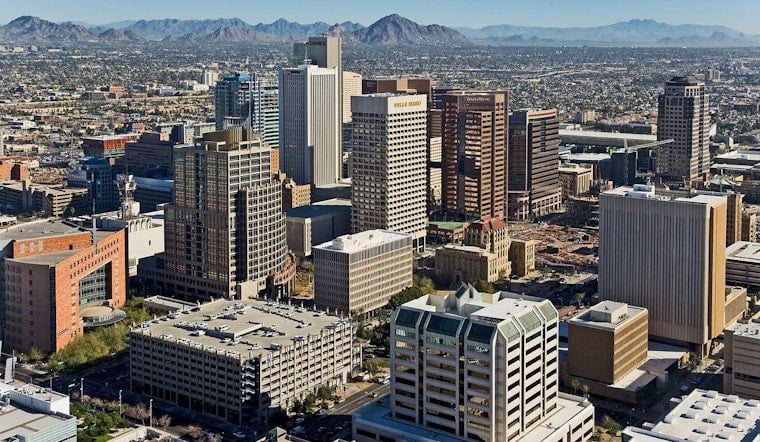
Arizona is rolling out a two-city space play: Yuma is being lined up for vertical rocket launches, while Sierra Vista is staking its claim as the state's re-entry and spacecraft manufacturing hub. The dueling proposals shared the spotlight on opening day of the Arizona Space Congress in downtown Phoenix, where city and state officials, university researchers and private contractors compared notes on how to turn big space talk into an actual launch pad. If federal regulators sign off, Arizona would join the small club of states that host FAA-licensed commercial space operations.
Conference organizers laid out the split strategy and said the paper chase has already started. Taryn Struck, co-founder of Space Rising, told ABC15 that “they're working on the FAA license right now” and that Sierra Vista “has locked in their anchor tenant” for re-entry operations. Panels on workforce, infrastructure and investment tried to answer the basic question hanging over the room: how to turn Arizona's space ambitions into steel, concrete and paychecks.
Federal sign‑off remains the gating item
For all the splashy talk, Arizona does not currently have an FAA-licensed spaceport, which means both the Yuma launch concept and the Sierra Vista re-entry proposal need federal approval before anything actually flies, according to the FAA's official list of licensed spaceports. The FAA's public spaceports directory, last updated April 17, 2026, lists licensed facilities in states such as California, Florida and New Mexico but shows no active license held by an Arizona operator. That blank line on the list is why environmental reviews, risk assessments and safety approvals are the unglamorous but essential homework before any ribbon-cutting.
Yuma: laying groundwork for launches
The City of Yuma's FY2026 budget explicitly calls out a plan to submit a spaceport application to the FAA, a clear signal that local officials are not just kicking the tires on the launch idea. City staff and regional partners say they are preparing environmental studies and a draft site-license application to back up that budget language. Local reporting also notes the city is now eyeing its first possible launch in 2028 or 2029, after design, permitting and infrastructure work are wrapped, so this is very much a long runway situation.
Sierra Vista and BlackStar eye re‑entry work
Sierra Vista, by contrast, is leaning hard into the re-entry and spacecraft servicing niche, centered on a planned BlackStar Orbital facility that the Arizona Commerce Authority has described as a roughly $7.1 million investment expected to create more than 50 jobs. The city finished a spaceport feasibility study in October 2024 and says it is pursuing FAA part 433 licensure to operate a re-entry site, steps officials say could turn Sierra Vista into a natural recovery and refurbishment center for reusable spacecraft. Local leaders point to the airport's long runway, its joint-use arrangement and cleared recovery zones as practical perks for return operations rather than flashy selling points.
Why two sites make sense
Supporters say a two-node model simply matches Arizona's geography. Yuma offers wide, relatively uncongested skies, nearby restricted military ranges and long stretches of friendly weather that are attractive for frequent launches. Sierra Vista, they argue, brings a different toolkit, with its airport, protected airspace and terrain bowl making it a candidate for controlled re-entries and testing. At the Arizona Space Congress, industry, defense and academic players tried to sketch how workforce training, energy resilience and legal and regulatory frameworks could be stitched together into a genuine statewide space plan. Backers say spreading activity across two cities would also spread the economic upside beyond the big metro areas and seed new manufacturing and maintenance jobs in rural Arizona.
What’s next
For now, the future of both sites is tied up in the slow grind of process: environmental reviews, FAA safety and licensing requirements, and lining up private operators willing to launch and recover vehicles in Arizona rather than somewhere with a longer space track record. Officials in Yuma and Sierra Vista say that work is underway even as schedules shift, while organizers from the congress and state economic leaders pitch federal funding and workforce programs to keep the momentum going. If approvals land, supporters say the projects could bring manufacturing, testing and dozens of aerospace jobs to southern and western Arizona. For the initial reporting and event coverage, see the Arizona Commerce Authority.





