

























































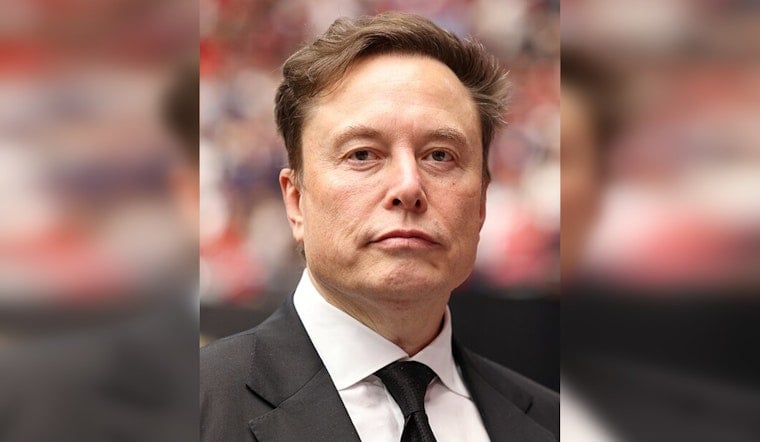
Federal marshals quietly handed limited law-enforcement powers to members of Elon Musk's private security team last year, even though some of those guards did not meet the agency's own training and experience standards, according to newly released internal emails.
The documents show a senior U.S. Marshals Service official signed off on exceptions so Musk's bodyguards could carry weapons and travel with him while he briefly led the Department of Government Efficiency. The special powers were set to run for two years and were restricted to personal protection, without general arrest authority.
What The Emails Reveal
The records surfaced after Democracy Forward sued for access to the emails, then shared them with reporters, according to the group's account. The files outline how, once Musk entered government, his private security detail was pulled into a federal system normally used for more traditional law-enforcement partnerships.
The Independent reports that the Marshals' associate director for operations approved waivers that sidestepped a basic law-enforcement training requirement and a one-year experience rule for at least some members of the detail. In other words, guards who would not ordinarily qualify for special deputation were still cleared to act under the Marshals' umbrella while protecting Musk.
Oversight Troubles In The Background
The move came against a backdrop of already documented problems with how the Marshals handle special deputations. In a September 2024 audit, the Justice Department's Justice Department Office of Inspector General warned that existing U.S. Marshals Service policies left the door open for unqualified or inappropriate deputations.
The watchdog urged the service to tighten up who can be deputized, how sponsorship works, and how long those temporary powers should last. It also pushed for stronger training and clearer internal rules, stressing that special deputation authority is supposed to be narrowly used, not casually handed out.
How Democracy Forward Is Framing It
Skye Perryman, CEO of Democracy Forward, said the emails "underscore the lawlessness" of how Musk and his team tapped into government resources and argued that Congress should dig in.
The group says it brought the lawsuit not only to make the Musk-related emails public but also to shed light on how often the Marshals have used their special deputation authority for requests that fall outside the usual law-enforcement playbook.
What Management Signed Off On
An internal memo dated Feb. 7, 2025, along with follow-up emails, show that Rich Kelly, then the Marshals' associate director for operations, recommended deputizing Musk's bodyguards for a two-year stretch. Their powers were to be valid only when they were protecting Musk in his capacity as a special government employee.
The Independent reports that the memo also made clear the deputized guards would be armed and able to travel with Musk across the United States and abroad while operating under that authority, but still would not have general arrest powers.
Legal Questions And What Comes Next
Legal and oversight specialists say giving special law-enforcement powers to private security working for a political adviser blurs lines meant to shield the public and the courts from conflicts and confusion. It also raises questions about who is accountable if one of those deputized guards is involved in a shooting or other serious incident.
The FOIA records include an internal note that flags possible liability exposure for the Marshals Service itself. It is still not clear when, or even if, the special deputations were formally revoked after the Department of Government Efficiency was disbanded in November 2025.
Congressional offices and watchdog groups are expected to press the Marshals Service for more detail on how long the deputations stayed in place, how broadly they were used, and whether the agency actually followed the inspector general's recommendations. For now, the emails add one more chapter to the continuing scrutiny of how the federal government handled Musk's short-lived role inside the executive branch and whether the guardrails on deputation authority held up when it counted.





_(cropped_2)_(b).jpg)