

























































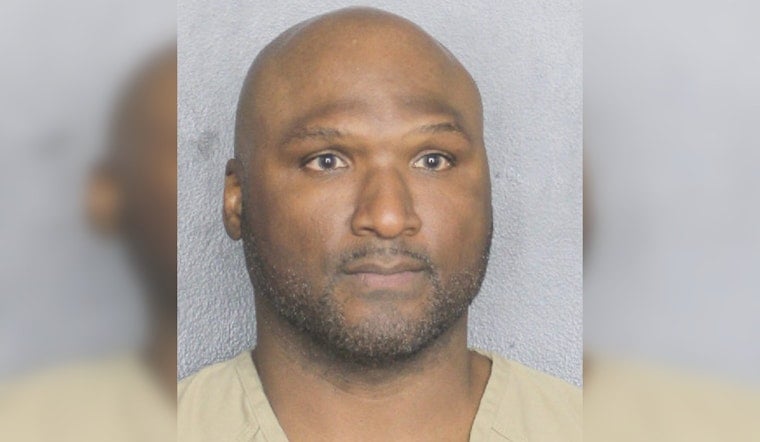
What was supposed to be a routine arrival from Cartagena turned into a federal drug case at Fort Lauderdale-Hollywood International Airport, where customs officers say a secondary inspection revealed a "large anomaly" in a passenger's groin area that turned out to be about 1.75 kilograms of cocaine. The traveler, identified in court papers as Marco, was taken into federal custody and is being held at the Broward Sheriff's Office Main Jail on behalf of the U.S. Marshals Service. Prosecutors have charged him with possession with intent to distribute more than 500 grams of cocaine and are asking a judge to keep him locked up pending trial.
What agents say they found
According to a federal complaint reviewed by Local 10, the inspection started with something that seemed relatively tame. Officers first opened a Centrum vitamin bottle in the man's luggage and found tablets wrapped inside. He allegedly told agents the pills were for HIV.
Things escalated when officers decided to conduct a pat-down after noticing that the traveler appeared nervous. The complaint says an officer felt a cylindrical bulge in the man's groin. When asked what it was, he reportedly skipped the excuses and answered, "Cocaine." According to Local 10, the package was wrapped in pink cellophane and weighed about 1.75 kilograms.
Body-carrier smuggling is not rare
Customs and Border Protection has long documented attempts to smuggle narcotics on or in travelers' bodies, from packages taped to the groin to drugs hidden in clothing or even handrails. Officers rely on secondary inspections, pat-downs and chemical testing to spot contraband that does not show up at first glance.
A local media release describing a prior airport seizure details similar concealment methods and the step-by-step process officers use when they suspect internal or body-carrier smuggling. In that release, CBP notes that officers routinely refer suspected smuggling cases to Homeland Security Investigations for follow-up.
Federal charge and possible penalties
Marco is charged in federal court with possession with intent to distribute more than 500 grams of cocaine, a quantity that triggers sentencing rules tied to drug weight. Under federal law, penalties climb as the amount of narcotics increases: offenses involving 500 grams or more of cocaine can carry a five-year mandatory minimum prison term, and larger quantities can push those minimums even higher, according to 21 U.S.C. § 841. A federal magistrate judge is expected to decide whether he remains jailed before trial at his initial court appearance.
Past arrest and name change
Court records cited in the complaint indicate that Marco, previously known as Christopher Allen Gransby, has been on law enforcement's radar before. Authorities in Nicaragua arrested him on Sept. 10, 2024, after they say he was found carrying about 7.69 kilograms of cocaine in a backpack, according to Local 10.
The station reports that he legally changed his name in Delaware several months after that arrest. He was scheduled for a federal hearing in Fort Lauderdale as prosecutors push for pretrial detention, and he is currently being held at the Broward Sheriff's Office Main Jail on behalf of the U.S. Marshals Service.
The investigation remains active. Prosecutors and agents are expected to lay out more details in future court filings as the case moves through the federal system.





