

























































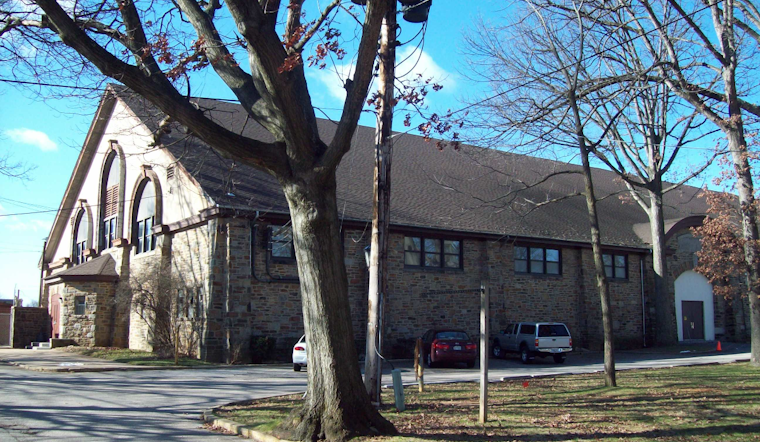
After sitting largely quiet for years, Pikesville's century-old National Guard armory on Reisterstown Road is being recast as a multi-use community campus that blends a senior center, art studios, a permanent farmers market, and new athletic fields. The public-private overhaul has already brought a restored veterans' club to life and is now ramping up into large-scale construction that backers say could reset the whole downtown corridor.
A Baltimore County economic analysis released in February estimates the redevelopment will generate about $123.5 million in one-time construction output and roughly $39.7 million in recurring annual economic activity. Using IMPLAN modeling, the county also projects 511 one-time construction jobs and about 253 ongoing jobs once the site is operating, according to Baltimore County.
The money is already lining up behind the vision. The Maryland Department of Housing and Community Development awarded $15 million in catalytic revitalization tax credits in January, according to Maryland DHCD. Baltimore County has also pledged capital funding to build outdoor fields, a destination playground, and walking paths under a memorandum of understanding with the Pikesville Armory Foundation, per reporting by JMore.
"Eight years ago, we had a governor's commission," David Ginsburg, executive director of the Pikesville Armory Foundation, told local reporters as he described the community process that shaped the plan. Ginsburg said the effort is designed to protect the site's military history while layering in arts, recreation, and programming that can pull in residents from across northwest Baltimore, according to WMAR-2 News.
Fundraising and philanthropic backing
The foundation announced a $2 million matching gift from the Harvey M. Meyerhoff Fund in January, a shot of philanthropy that organizers say will double the impact of larger private donations for Phase 2. The commitment matches dollar-for-dollar gifts of $50,000 or more and is meant to jump-start construction of a destination ADA playground, walking path, and event lawn, JMore reports.
Plans, partners and design
Architects' renderings and project materials show the main drill hall reimagined with indoor basketball and pickleball courts, a third-floor performance space, makerspaces, and cafés. The historic garages are slated to become artist studios and small retail spaces. The redevelopment is led by the Pikesville Armory Foundation in partnership with Seawall and Onyx Development, with design work from Ziger|Snead Architects and coverage in regional trade press such as CityBiz.
Timeline and what will open when
Backers have mapped out a phased schedule. The NCO Club restoration wrapped up in 2025. Phase two, which includes the fields, playground, and parking, is expected to start construction in the first quarter of next year, with larger campus operations projected through 2028. Ginsburg told WMAR-2 News that roughly 14 acres of outdoor recreation, including two full-size turf fields, a one-kilometer walking path, and a one-acre ADA playground, should be open by mid-2028, with indoor courts and other community hub facilities following after that.
What is already happening at the armory
The neighborhood is already seeing early returns. The renovated NCO Club reopened last year after a major upgrade, and the foundation has been hosting pop-up markets and arts activations on the grounds to build momentum. The site hosted a PopUp! inflatable art festival in September 2025 and continues to schedule markets and music nights, according to BmoreArt and Pikesville Armory Foundation press materials.
Supporters say the mix of free public space, arts programming, and indoor recreation could give a long-stalled stretch of Reisterstown Road a fresh foot-traffic economy while providing services for older residents and families. Local coverage has framed the project as a carefully coordinated blend of county investment, philanthropy, and private development meant to revive the corridor, according to Baltimore Fishbowl.





