

























































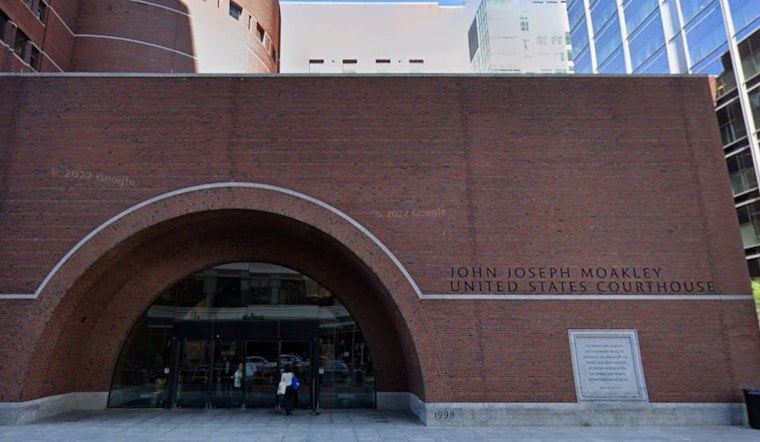
Two Massachusetts men pleaded guilty Friday in federal court to setting off a large commercial firework inside Harvard Medical School last fall, admitting to a stunt that prosecutors say triggered a thunderous blast in a neuroscience corridor but, by sheer luck, injured no one. Logan David Patterson and Dominick Frank Cardoza each changed their pleas to guilty on one count of conspiracy, with sentencing set for Aug. 4, 2026. Officials said labs and equipment were inspected afterward and found to be operational.
In court, the pair agreed to the government’s account that they slipped into the Goldenson Building at 220 Longwood Ave. in the early hours of Nov. 1, 2025, and detonated what prosecutors described as a “large, commercial firework” inside a fourth floor neuroscience lab. Surveillance footage shows the men recording themselves and later sharing the video with friends, a decision that helped investigators track them down. According to WCVB, the judge accepted their plea changes in federal court and scheduled sentencing for Aug. 4.
How investigators say it unfolded
Federal charging documents lay out a minute by minute timeline. Around 2:24 a.m., surveillance cameras captured the pair lighting what appeared to be Roman candle style fireworks along Longwood Avenue, then climbing a chain link fence and construction scaffolding to access the Goldenson roof. From there, they made their way into the fourth floor corridor, where a pyrotechnic device exploded inside a wooden locker.
The affidavit also describes the suspects moving between the Wentworth Institute of Technology and MassArt campuses after the blast as they tried to ditch clothing and regroup. Those details appear in the criminal complaint filed by the U.S. Attorney’s Office, District of Massachusetts.
How they were identified
Harvard University police released surveillance stills after the explosion, and several Wentworth students later recognized the images and contacted investigators, according to court records. Prosecutors say Patterson and Cardoza had recorded the blast on a cellphone and proudly showed the clip to friends in the days that followed, a bit of locker room bravado that ended up strengthening the government’s case.
Defense attorney Kevin Reddington did not exactly sugarcoat things. “Their brains aren’t developed and they do stupid things,” he told reporters, a comment captured by WCVB.
What comes next
By pleading guilty, the men now face federal penalties that could include up to five years in prison, three years of supervised release, and fines as high as $250,000, according to the government’s charging materials. A judge is set to impose sentence on Aug. 4, 2026, when prosecutors may also ask for restitution to cover cleanup costs and any damage to lab equipment. The U.S. Attorney’s Office, District of Massachusetts outlined those potential penalties in its initial press release.
Campus and safety questions
Harvard officials said inspection teams combed through the affected lab after the November blast and found no structural damage. University and Boston police also stepped up patrols on the Longwood medical campus while investigators worked the case.
The incident has renewed attention on how easily people can reach rooftops and research spaces after hours, particularly where construction scaffolding creates convenient ladders. The episode has sparked fresh scrutiny of perimeter security and late night access to clinical research buildings, according to reporting from the Boston Globe.





