

























































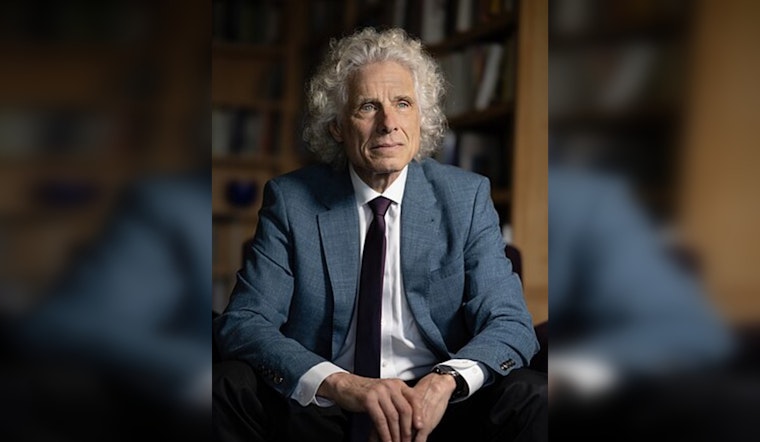
Steven Pinker is 71, officially on sabbatical, and unofficially in the middle of Harvard's latest identity crisis. The celebrity psychologist has become one of the most visible insiders pushing for change, and in Cambridge the argument has moved from big-picture free-speech theory to a blunt local question: can Pinker, with his op-eds, backroom meetings, and growing faculty network, actually steady the university or is he just deepening the split around it?
Council on Academic Freedom and policy wins
Pinker helped launch the Council on Academic Freedom at Harvard in April 2023, and the group now says it has more than 200 faculty members from across the university, according to the Council on Academic Freedom at Harvard. In May 2024, Harvard adopted a faculty working group's Institutional Voice recommendations, a move administrators framed as limiting official university statements to issues tied to Harvard's core academic mission, according to Harvard University.
Inside the hiring process, critics of mandatory diversity statements have leaned on peer-institution changes and internal reviews. A 2024 working-group report pointed to Harvard's own shift in hiring guidance as part of a broader change in how diversity statements are used in faculty searches, according to the Faculty Diversity Statement Working Group Report. To supporters, these tweaks look like real, if technical, wins. To skeptics, they are paperwork fixes that leave the real campus culture fights untouched.
Pinker’s public playbook: op-eds and plans
Even on sabbatical, Pinker has hardly been offstage. A recent profile noted that at 71 he has ramped up opinion writing, interviews, and public appearances, according to Boston Magazine. He also weighed in with a long essay in the New York Times, "Harvard Derangement Syndrome," where he argued that the university should avoid overreacting to campus controversies and instead pursue targeted reforms, according to The New York Times.
Pinker and allies on the Council on Academic Freedom have also circulated a five-point plan for institutional reform. They argue that the plan lines up with several of the working-group recommendations Harvard is now putting into practice, positioning Pinker not just as a commentator but as someone trying to sync his agenda with the university's emerging policy framework.
Controversies that complicate his case
The same visibility that helps Pinker move ideas through Harvard also gives his critics plenty to work with. They point to his appearances on contentious platforms, especially a June 2025 interview on the Aporia podcast, a choice that, according to The Guardian, risked lending legitimacy to outlets linked by detractors to race-science networks.
Then there is his proximity to Jeffrey Epstein, an issue that reliably reignites whenever Pinker steps into a new fight. Reporting on released emails and documents showed Pinker in Epstein-adjacent email threads and photos, though news organizations have underscored that there is no allegation of wrongdoing by Pinker, per The Boston Globe. Pinker has said he did not take Epstein's money and has described some encounters as politeness he now regrets, comments that were also reported by the Globe. For supporters, those explanations close the book. For opponents, they remain part of the case against making him the face of reform.
What this means for Harvard in Cambridge
Harvard administrators say the new Institutional Voice rules, formally accepted by university leadership on May 28, 2024, are meant to protect teaching and research by narrowing when the institution speaks officially, according to the Harvard Gazette. In practice, the most visible shifts so far are wonky ones: fresh guidance on institutional statements and revised hiring paperwork. Those changes may take some steam out of external attacks, but they do not settle the deeper arguments roiling faculty lounges, student groups, and alumni lists from Cambridge to the suburbs.
Locally, the question is whether Pinker's mix of influence and controversy helps or hurts. He has the access and platform to shape policy inside Harvard, yet he does not enjoy universal credibility among faculty, students, or alumni. In a city that watches Harvard like a hometown team, his involvement may speed up technical reforms, but the university's long-term legitimacy will hinge on how those changes are carried out, not just on who is leading the charge.





