

























































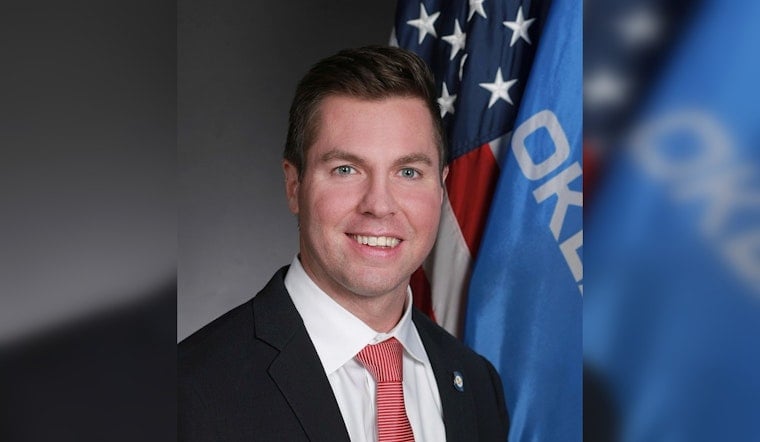
State Rep. Toni Hasenbeck has taken her fight against Sen. Adam Pugh’s candidacy straight to the Oklahoma Supreme Court, asking justices on Friday, April 24, 2026, to knock him off the Republican primary ballot for state superintendent. Her emergency petition argues that a constitutional ban tied to a recent pay increase makes Pugh ineligible to serve. The move escalates a simmering legal dispute that now hangs over a packed GOP primary ahead of the June 16 election.
Hasenbeck Takes the Fight to the Supreme Court
Hasenbeck’s legal team filed an emergency application asking the Supreme Court to assume original jurisdiction and order Pugh removed from the ballot, according to NonDoc. Her petition asks justices to overturn the State Election Board’s earlier decision and rule directly on whether Pugh’s current legislative term blocks him from becoming superintendent. Her camp frames the issue as a constitutional question that belongs with the state’s highest court, not an administrative board.
Election Board Kept Pugh on the Ballot
The Oklahoma State Election Board previously rejected Hasenbeck’s initial contest on April 16 and ruled that Pugh could stay on the ballot, as reported by KOCO. During that hearing, board members were told that the Statewide Official Compensation Commission approved a salary bump for the superintendent in November 2025, but the board concluded that the increase did not disqualify Pugh. That decision left him in the running alongside several other Republicans in the race for the party’s nomination.
The Constitutional Text and Key Precedent
At the center of the dispute is Article V, Section 23 of the Oklahoma Constitution, which says legislators cannot be elected to another state office if that office’s emoluments were increased during the legislator’s term. The provision’s language appears in the Oklahoma Constitution. For legal context, the Oklahoma Supreme Court has waded into similar waters before and took original jurisdiction in Fair v. State Election Board (1994), a case both sides are expected to lean on heavily. How the court reads that constitutional text, and how it lines up Fair with today’s facts, will likely determine the outcome.
Pugh Pushes Back and the Race on the Line
Pugh’s campaign has pushed back on the challenge and signaled that it remains confident in both the court process and the voters waiting at the end of it. The superintendent contest itself is already crowded on the Republican side; the State Election Board’s candidate list shows multiple GOP contenders and a June 16, 2026 primary date (State Election Board). A Supreme Court ruling that alters who is allowed on the ballot could reshape the entire race just as early voting approaches.
What Attorneys Say and What Comes Next
Hasenbeck’s brief, written by constitutional attorney Spencer Habluetzel, argues that carving out an exception for sitting legislators would amount to an unconstitutional special law. Pugh’s defenders, led by attorney Mike Fields, counter that the compensation commission’s action on pay falls outside the constitutional language Hasenbeck is relying on. The emergency filing also notes that Chief Justice Dustin Rowe has set the matter for an oral presentation before a court referee via Microsoft Teams, according to NonDoc. If the court agrees to take original jurisdiction and moves quickly, its ruling could decide exactly who appears on the June ballot.
However the justices rule, their timetable will dictate whether the issue is settled before ballots are finalized and early voting starts. Campaigns, county election officials and voters will be watching closely to see how the high court applies Article V, Section 23 to a modern pay decision by the compensation commission.




