

























































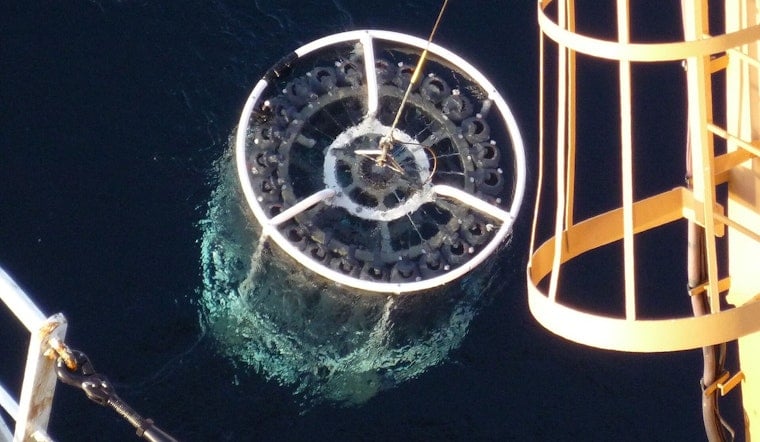
New long-term DNA records from Station ALOHA show that the ocean's tiniest residents keep surprisingly strict seasonal schedules, from sunlit surface waters all the way down to nearly 2.5 miles deep, and that this quiet habit of "taking turns" with limited nutrients helps explain how so many microbial species can coexist in the same patch of water. Based on years of monthly sampling at a research site north of Oʻahu, the work reframes the classic "paradox of the plankton" for open-ocean waters. Scientists report that this tight seasonal timing of microbial booms and busts ripples up the food web, keeping organic matter steadily supplied to larval fish and other organisms.
The paper and where it came from
The peer-reviewed paper, "Seasonality drives temporal niche partitioning of pelagic prokaryotes," appears in The ISME Journal and presents depth-profile DNA results collected over more than eight years at Station ALOHA. The article lists Fuyan Li as lead author and includes collaborators from the University of Hawaiʻi's microbial oceanography center.
How researchers tracked seasonal shifts
Scientists used month-in, month-out cruises from the Hawaiʻi Ocean Time-series (HOT) program, along with high-resolution DNA sequencing, to track prokaryote abundance through the water column, from the euphotic zone into the deep sea, according to the University of Hawaiʻi. That combination of frequent sampling and long duration let the team pinpoint when closely related strains hit their peak and how their use of shared resources shifted across the seasons.
Seasonal ecotypes and deep surprises
The ISME paper reports that more than 62% of pelagic prokaryote taxa in the upper 150 meters show significant annual cycling, with clear seasonal signals still detectable in some taxa down to about 4,000 meters. "Taking turns with respect to nutrient use throughout the year seems to be a key ecological strategy for microbial communities to maintain their diversity," Li said in a statement to the University of Hawaiʻi.
Why this matters here
For Hawaiʻi waters and the broader North Pacific, those microbial rhythms matter because they keep a baseline flow of organic matter and energy moving up the food chain, supporting larvae and higher trophic levels, as reported by Kauaʻi Now. Researchers warn that if climate-driven changes alter ocean mixing or the timing of nutrient inputs, the competitive "turn-taking" that preserves this microbial diversity could shift, with consequences for local productivity.
Funders and what’s next
The work was funded in part by the Simons Foundation's SCOPE program, which supported the long-term sampling and analysis, according to a press release shared via EurekAlert!. The authors say the Station ALOHA record will serve as a baseline to test whether changing ocean temperatures and stratification will compress, expand or otherwise rearrange the seasonal windows that different ecotypes rely on.
The study adds a clear seasonal beat to the ocean's microbial world and gives researchers a sharper map of how microscopic life helps keep the Pacific productive year-round. Follow-up time-series in other ocean gyres will show whether this pattern is a global rule or a regional feature tied specifically to the North Pacific Subtropical Gyre.





