

























































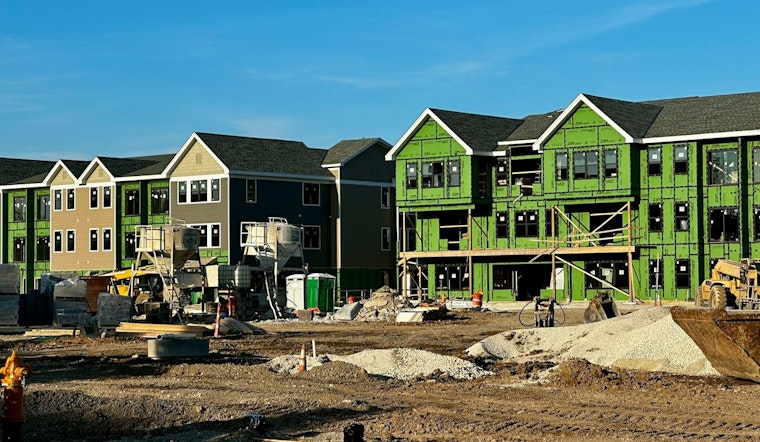
Health Net is putting $10 million on the table to try to speed up Los Angeles County’s deeply sluggish housing pipeline, backing LA4LA’s new Guarantee Fund to move affordable and mixed-income projects from paperwork to construction faster. The money will underwrite guarantees intended to give lenders more confidence in rent streams backed by subsidies, so shovel-ready developments are not left waiting on the sidelines. Company leaders are pitching the move as part of a broader bet that stable housing can improve health outcomes for Medi-Cal members.
The insurer confirmed the contribution in a company press release, saying the Guarantee Fund will be available to projects across the country and that the same dollars can be reused as individual deals wrap up. According to PR Newswire, Dorothy Seleski, Health Net’s Medi-Cal president, said, “Safe, stable housing is one of the most powerful prescriptions for better health.”
How the Guarantee Fund Is Supposed To Work
LA4LA describes its Guarantee Tool as a public-private setup that uses philanthropic and mission-driven capital to take some of the risk out of financing, so projects that rely on vouchers and other subsidies can clear lender due diligence more quickly. The idea is to close the timing and underwriting gaps that often stall already-approved developments and push costs higher, according to LA4LA. Local reporting has noted that some projects supported through the tool may reserve up to 30% of units for voucher holders. MyNewsLA reports that developers and funders expect the guarantees to shorten start-up delays.
Why the County Still Needs Big Solutions
The new funding arrives against a now-familiar backdrop: Los Angeles County’s chronic shortage of affordable places to live. The California Housing Partnership’s 2024 county profile estimates that about 494,446 low-income renter households in the county lack access to an affordable home. The California Housing Partnership found steep shortfalls and heavy cost burdens for extremely low-income renters in particular.
On the streets, the numbers are equally stark. LAHSA’s Point-in-Time count has put the county’s unhoused population above 75,000 in recent official tallies, underscoring how demand for both permanent housing and interim beds continues to outstrip what is being built. LAHSA data highlight just how far supply still falls short of need.
Health Net and its partners argue that private and philanthropic capital can help move projects more quickly than relying on slower public appropriations alone. In March, the company announced a broader slate of housing grants totaling $31.25 million across four counties and said it has directed about $93 million to housing and homelessness initiatives since 2020. Those earlier grants included targeted awards in Los Angeles that helped close financing gaps on smaller developments. The March package is detailed in Health Net.
What Developers and Tenants Could See
Backers say the Guarantee Fund is structured so that capital can be recycled. As projects finish and guarantees are released, the same pool of money can support new groundbreakings, potentially stretching the impact of the initial $10 million. The arrangement is also meant to make voucher-supported units more attractive to private lenders who might otherwise hesitate to underwrite long-term subsidy contracts, according to PR Newswire. For tenants, organizers say that could mean projects already through the city planning process break ground sooner and deliver homes faster than under traditional timelines.
LA4LA’s lead strategist, Sarah Dusseault, thanked Health Net for the commitment and said the Guarantee Tool “will transform how projects approach financing and increase the viability of affordable housing.” That comment appeared in local coverage of the rollout, with MyNewsLA outlining the early reaction and basic project details.
No one is pretending $10 million will single-handedly solve Los Angeles’s housing crunch, but funders and some city officials contend that guarantee tools like this can shave months, sometimes years, off the time between approval and move-in. If the model scales up, organizers say redeployable guarantees could become one of several tools that help unclog the region’s backed-up housing pipeline while other funding plans and zoning reforms inch forward.





