

























































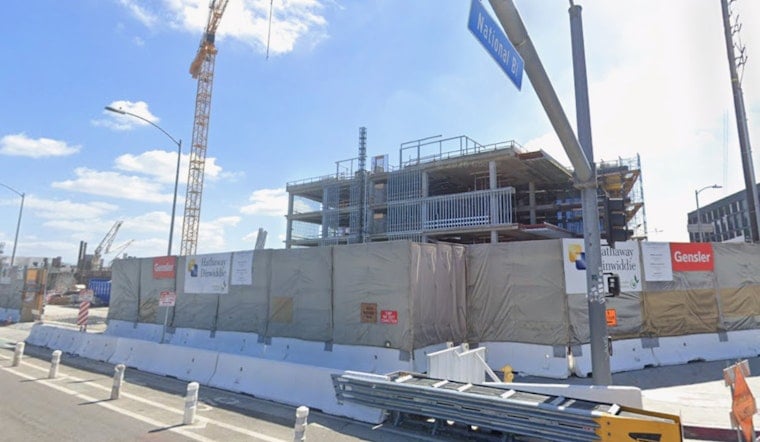
Apple's long-awaited Westside office campus is starting to look less like a construction site and more like a major new piece of the Los Angeles-Culver City border. Exterior finishes are now appearing along National Boulevard, while the neighboring Los Angeles building has reached the top of its concrete frame.
The latest progress was detailed Monday by Urbanize LA, which reported that the project has moved into a more visible phase nine months after its previous construction update.
A 536,000-Square-Foot Campus Straddling Two Cities
The development, known as Culver Crossings, spans a 4.46-acre site divided between Los Angeles and Culver City. A Culver City staff report describes the project as Apple's future Culver City headquarters, with two contemporary buildings rising four and five stories and accommodating office space plus production facilities.
When finished, the campus is expected to contain about 536,000 square feet of space and underground parking for roughly 1,200 vehicles. The buildings are being constructed in overlapping phases, with the Los Angeles portion moving ahead of the Culver City structure.
Terraces, Promenades And A Parklet Instead Of Retail
The design is being handled by Gensler and includes upper-floor terrace decks, landscaped promenades and a central courtyard. Urbanize LA reports that the campus will include about 58,000 square feet of open space, including a small park-like alcove near Apple's existing Washington Boulevard office.
There will not be storefronts or other street-level commercial uses in the new complex, according to the project plans. Instead, entrances, shuttle drop-off areas and landscaped edges are intended to give the large office campus some presence along Venice and National boulevards.
Metro Proximity Adds A Transit-Sized Twist
The project sits less than 600 feet from the Metro E Line's Culver City Station, a detail highlighted in the city's planning review. That proximity could make transit access an important part of how thousands of future Apple workers reach the campus, even as the development includes a very substantial subterranean garage.
For now, the most obvious change is above ground: the project is finally acquiring its exterior identity. As the facade work spreads and the second building rises, Apple's Westside expansion is becoming difficult to miss from the busy intersection where Los Angeles, Culver City and the region's growing media corridor meet.





