

























































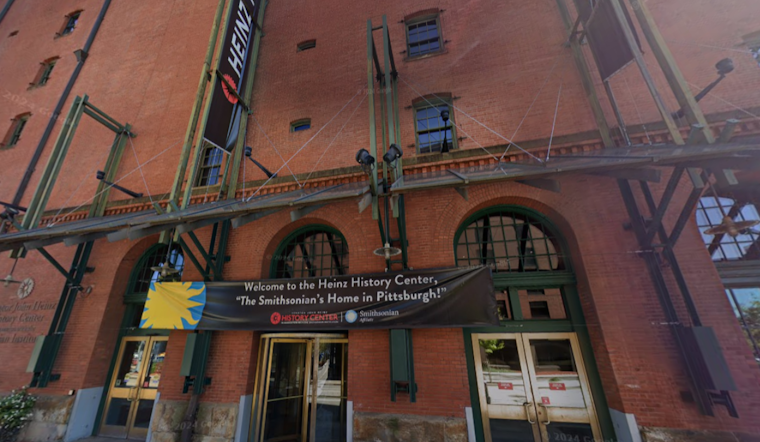
The Heinz History Center officially put shovels in the ground Thursday on a 92,000-square-foot expansion of its Strip District campus, kicking off an $80 million capital campaign to pay for the project. The new wing will bring in fresh galleries, classrooms, and event spaces, including a fourth-floor Museum of African American History and a marquee exhibition on Fred Rogers. Museum leaders say the buildout is designed to boost school visits and create a more visible Penn Avenue gateway into the neighborhood.
The effort, branded “History for All,” is the largest fundraising push in the museum’s history, and officials report they have already secured roughly 70% of the $80 million goal, according to the Heinz History Center. The campaign materials outline a 92,000-square-foot Penn Avenue addition with expanded gallery space, classrooms and event facilities meant to support more school and community programs.
What the expansion will include
Interactive exhibitions are set to anchor the new wing, including a major Fred Rogers display that will showcase original "Mister Rogers' Neighborhood" sets and artifacts. The project also calls for expanded space for the Franco Harris Sports Museum, the Italian American Program, and the Rauh Jewish Archives. A fourth-floor Museum of African American History, described as a “museum-within-a-museum,” will house long-term and rotating exhibitions. WPXI reported that the plans also feature an 8,500-square-foot outdoor terrace, a Penn Avenue plaza for large artifacts, and a 150-seat theater.
Design, partners and timeline
Design and construction partners listed on the campaign page include Desmone Architects and Mascaro Construction, with consulting support from M3 Consultants, according to the History Center’s materials. Museum and civic leaders say the work is expected to wrap up by 2028. The expansion follows a planning commission vote that cleared the demolition of four vacant Penn Avenue buildings last year to make room for the new wing, as detailed by WESA, which also outlined the block acquisitions that set the stage for the project.
Education and access
Leaders say a major goal of the expansion is to deepen the center’s education role, with smart classrooms, learning labs, and recording studios planned to handle an estimated 50% increase in school visits. That broader access push builds on the Kamin “Free for Kids” Initiative, supported by an $11.5 million gift from Daniel G. and Carole L. Kamin that guarantees free admission for visitors 17 and under. Axios previously covered the Kamin gift and its impact on outreach.
Funding and next steps
Museum officials say the capital campaign has drawn strong backing from board members and foundations, but still needs additional gifts to close the $80 million gap. According to the Pittsburgh Business Times, leadership has secured commitments for about 70% of the total and plans to keep working with civic and philanthropic partners to finish the job ahead of key construction milestones. The center expects to use phased construction so core exhibits and programs can stay open while the new wing goes up.
What visitors should expect
Visitors can expect visible construction activity along Penn Avenue and some temporary closures as demolition and phased building move forward. Museum officials emphasize that many galleries and programs will remain open throughout the multi-year project. When it is finished, the expanded campus is intended to serve as a stronger cultural anchor for the Strip District, with new event spaces, better orientation resources, and a wider range of stories from across the region.





