

























































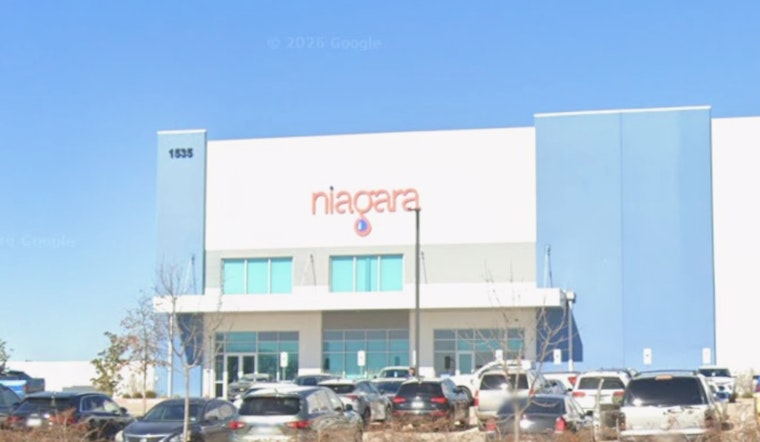
Niagara Bottling has doubled down on Lancaster’s role in the Dallas-Fort Worth industrial scene, pointing to upgraded roads, federal freight grants and a homegrown incentive package as the reasons it picked the city for a major expansion. The company’s roughly 1.2 million square foot plant south of Interstate 20 now serves as a flagship along a fast-growing industrial corridor that city leaders hope will fuel steady tax revenue and manufacturing jobs. Local officials and company representatives frame the move as fresh proof that the Dallas County Inland Port is starting to deliver on its long-promised logistics-friendly growth.
According to Niagara Bottling, the Lancaster site opened in early 2023 and includes about 1,235,520 square feet of advanced manufacturing and distribution space. The company estimates capital investment of more than $100 million and roughly 70 full-time positions. The Dallas Morning News reported that the project rose on a 70-acre site at 1535 E. Belt Line Road and involved roughly $70 million in construction costs. Niagara's public materials also highlight sustainability measures and state that the company pays volumetric fees for water and "millions in taxes and fees" to local systems.
Why Lancaster?
Company and city officials say Lancaster’s freight access, built around the Union Pacific intermodal terminal and the Dallas County Inland Port, plus a cooperative local government, tipped the scales in site selection. As reported by The Business Journals, Niagara worked with the city, Dallas County and the North Central Texas Council of Governments to pursue grant approvals and streamline permitting. Niagara’s economic development director, John Krug, is listed in company materials as a leader of the team that negotiates incentives and community relations and has represented Niagara at industry conferences, per conference program materials. The region’s infrastructure push also includes a $25 million federal multimodal grant that is intended to improve Belt Line and Sunrise roads for freight traffic, according to the North Central Texas Council of Governments.
Incentives and what the city approved
City packets show Lancaster approved a Chapter 380 economic development agreement that spells out rebate tiers for business personal property and real property taxes, development fee grants and a limited sales tax reimbursement tied to sourcing construction materials locally. The council materials list the site at 1535 East Belt Line Road, set minimum investment thresholds and estimate roughly $10.25 million in new property tax collections over 10 years if targets are met, with rebate estimates of about $5.12 million. See the City of Lancaster council packet for the full terms.
What it means for roads and jobs
Local planners say the DCIP improvements, which include widening Belt Line Road and building Sunrise Road as a four-lane connector, are designed to handle increased industrial freight and improve safety. A sponsored Dallas Business Journal piece published last year noted that the $25 million grant is a linchpin that could unlock millions more square feet of industrial space and projected thousands of jobs tied to the inland port buildout. City leaders argue that those infrastructure gains, rather than a splashy job count at any one plant, were the real selling point for Niagara and other manufacturers taking a hard look at Lancaster.
Next steps and community impact
Niagara emphasizes water stewardship in its public materials and says standard operations at its plants use less water than keeping a few golf courses green, while the company typically pays volumetric water fees. The city agreement requires Niagara to submit receipts and payroll verifications to trigger rebates, which means municipal staff will monitor local sourcing and tax filings as the site ramps up, per the council packet. For Lancaster, the tradeoff is a familiar one, modest full-time headcount on site paired with sizable property tax revenue and ongoing municipal fee payments outlined in both company and city documents.





