

























































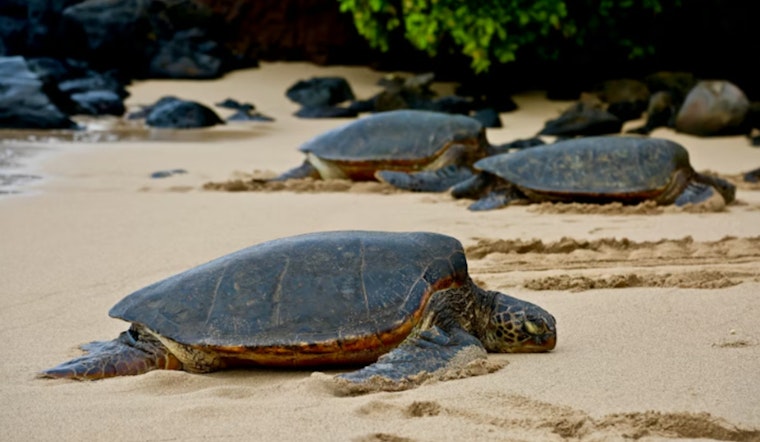
For the first time, researchers have caught Hawaiian green sea turtles, or honu, on camera going to town on thick carpets of the fast‑spreading red alga Chondria tumulosa at Midway Atoll. The new footage, paired with a necropsy of a stranded turtle, shows that honu can rip out big chunks of the invasive seaweed in a single feeding session, yet those same animals may also ferry tiny fragments around the island chain as they migrate. In other words, honu may be both much‑needed cleanup crew and accidental delivery service for a major reef threat in the Northwestern Hawaiian Islands.
GoPro Clips and Necropsy Back Up Turtle Grazing
A brief report in the journal Coral Reefs details about 50 minutes of GoPro video shot in June and July 2025 that captured three honu grazing on C. tumulosa. One female in particular was filmed taking up to 18 bites in just 95 seconds, leaving behind 5–15‑centimeter patches cleared right down through the algal canopy. The same study also describes fragments of the alga found inside the digestive tract of a stranded adult female turtle, where C. tumulosa visually made up about 25% of the plant material in her esophagus and crop.
Runaway Alga Threatens Multiple Atolls
Researchers with the University of Hawaiʻi at Mānoa report that C. tumulosa first turned up at Manawai, also known as Pearl and Hermes Atoll, in 2016. Since that initial sighting, it has spread to cover more than 101 square kilometers of reef habitat. The alga was detected later at Kuaihelani (Midway) in 2021 and Hōlanikū (Kure) in 2022. Its mats can grow thicker than 6 centimeters and smother living coral, which in turn reshapes habitat relied on by reef fish, invertebrates and native limu.
Honu Help Control Mats, But May Spread Pieces
"The fish that are in the area will eat small little pieces, but a turtle the size of that animal can actually come in and take significant volumes," Celia Smith told the University of Hawaiʻi. Co‑author and U.S. Fish and Wildlife Service biologist Tammy Summers added that honu "are native megaherbivores with potential to suppress C. tumulosa biomass but may spread fragments during migrations."
Because most Hawaiian green sea turtle nesting happens at Lalo (French Frigate Shoals), the authors urge managers to prioritize targeted eDNA monitoring there. The concern is that if turtles are carrying viable fragments between sites, heavy nesting activity at Lalo could concentrate the risk of new outbreaks.
What Managers Are Watching Next
The new findings are already reshaping monitoring plans for Papahānaumokuākea and partner agencies, adding a turtle twist to ongoing research cruises and mapping projects that have been tracking the alga since it was first reported. Papahānaumokuākea and NOAA teams have launched expeditions to survey Chondria and are sharpening early‑detection tools, including passive eDNA samplers designed to flag new blooms before they can reach the Main Hawaiian Islands.
Next steps will center on following honu movements, sampling for algal DNA and testing whether turtle grazing can meaningfully reduce large mats without speeding up their spread. The study authors describe this as an urgent question. As Coral Reefs notes, the necropsy evidence underlines both sides of the story: honu may help knock back C. tumulosa biomass while also posing a real risk of distributing its fragments across the archipelago.





