

























































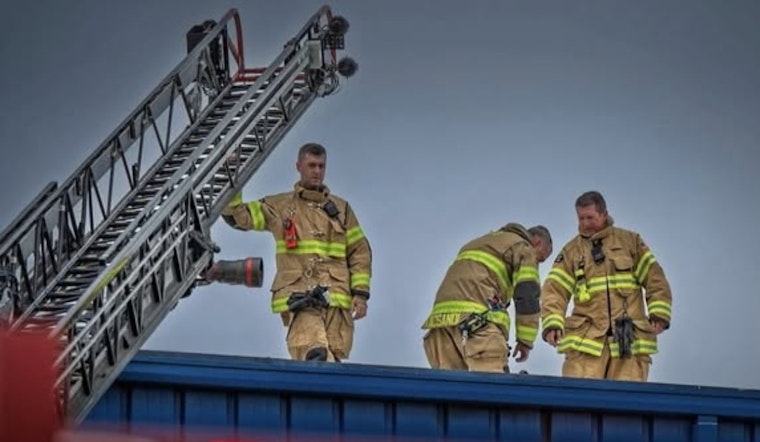
A weekend shift at a Maxtown Road manufacturing plant took an alarming turn Saturday when flames ripped across the building’s rubber roof membrane, forcing workers out and drawing a multi-agency response. Westerville firefighters attacked the roof fire while eyeing a nearby compressed-gas tank as a priority concern, and Genoa Township crews rolled in to provide mutual aid as the incident unfolded.
Fire Started At Rooftop Exhaust As Crews Zeroed In On Gas Tank
According to Westerville Fire 150th, the blaze originated at a rooftop exhaust, then spread along the facility’s rubber roofing. Workers told the page that hydrogen and nitrogen are used on site to test the integrity of the small tanks produced there, a detail that put firefighters on alert. Responders identified a hydrogen gas tank in the plant’s southwest corner as a potential hazard, then later reported that the risk from that tank had been mitigated.
Plant Operations And Local Response
Company records identify a Worthington Cylinder facility on Maxtown Road that manufactures pressure cylinders and related containers, which tracks with worker accounts of on-site tank testing; see Worthington Cylinder Corporation for site details. Westerville units led the fire attack and were joined on scene by Genoa Township crews, according to the Westerville Fire 150th report. For background on the department’s resources and mutual-aid setup, see the Westerville Division of Fire.
Why Firefighters Treat Compressed-Gas Operations With Extra Caution
Hydrogen is highly flammable and requires strict siting, monitoring and response protocols, which helps explain why crews kept such a close watch on the tank even after the visible flames were knocked down. The U.S. Department of Energy has issued training materials and guidance tied to hydrogen safety and NFPA 2 code developments (DOE H2IQ update), and OSHA notes that compressed gases present significant fire and mechanical hazards in industrial environments (OSHA guidance). Those playbooks shape how first responders size up and manage incidents like this one.
Firefighters ultimately secured the scene after confirming that the hydrogen tank no longer posed a danger, and workers were temporarily displaced while crews wrapped up ventilation and final safety checks. Photos in the social media post show firefighters operating on the roof as they inspected and cleared the affected area.





