

























































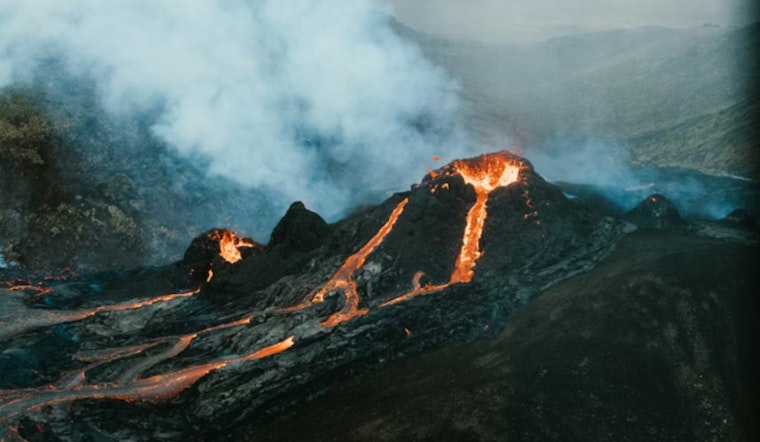
Kīlauea is back on high watch. Late Monday, scientists bumped the volcano’s alert level to WATCH after they logged renewed summit inflation and fresh glow from vents inside Halemaʻumaʻu, all hinting that another lava fountaining episode may be on deck. The Hawaiian Volcano Observatory reported short-lived precursory activity, including glowing vents, intermittent flames and a brief, sluggish lava flow inside the crater overnight. Forecast models now point to an eruptive window later this week, and officials warned that low level activity can continue for hours to days before any fountains actually kick in.
Kilauea Message 2026-04-20 21:20:45 HST. HVO has raised the Volcano Alert Level for Kīlauea from ADVISORY to WATCH, and the Aviation Color Code from YELLOW to ORANGE, in response to episode 45 precursory low-level activity within Halema'uma'u.
— USGS Volcanoes (@USGSVolcanoes) April 21, 2026
HVO Raises Alert After New Summit Activity
In an observatory message, the U.S. Geological Survey’s Hawaiian Volcano Observatory wrote, "HVO has raised the Volcano Alert Level for Kīlauea from ADVISORY to WATCH, and the Aviation Color Code from YELLOW to ORANGE." According to USGS, scientists saw strong glow at the south vent, intermittent glow at the north vent and a short lived lava flow from the north vent late Monday, all within Halemaʻumaʻu.
When Could The Next Episode Start?
Forecast models based on summit deformation suggest the next fountaining episode, labeled episode 45, could begin sometime between April 21 and April 26. As reported by Hawaii News Now, HVO cautioned that this kind of low level precursory activity may linger for hours to days before lava fountains reappear, so the crater could simmer for a while before anything dramatic shows up on camera.
Hazards To Expect
Even when fountains pause, Kīlauea keeps putting out large amounts of volcanic gases, mainly sulfur dioxide. That gas can create vog and irritate lungs and eyes for people downwind. HVO's daily update notes that the current activity is confined to the closed area of Hawaiʻi Volcanoes National Park and that tephra, gas and localized lava flows remain the main hazards in the summit region. Visitors are urged to rely on official access information from USGS before getting too close to the action.
Local Response And Watching The Cams
HVO says it is coordinating with Hawaiʻi Volcanoes National Park and Hawaiʻi County Civil Defense as this latest episode ramps up. On the ground and online, local outlets and residents are glued to livestreams and road and park notices, waiting to see whether the glow turns into full on fountains. Coverage from Big Island Video News and other local media has been tracking observatory messages and earlier closures. Officials continue to advise anyone with respiratory conditions to monitor updates from emergency agencies and HVO before heading toward the summit area.





