

























































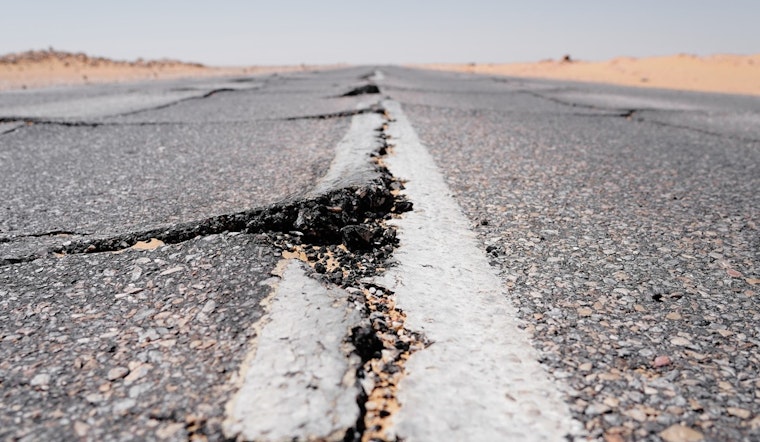
Los Angeles has quietly pulled back from full curb-to-curb street resurfacing and leaned into partial “large asphalt repairs” instead, a shift that often leaves skinny strips of cracked, aging pavement right next to fresh blacktop. Street-safety advocates say the move effectively puts voter-mandated bike lanes, bus lanes and curb-ramp upgrades on ice. City officials counter that budget and staffing limits are forcing the pivot and insist that full resurfacing will return once they finish a backlog of required curb-ramp work.
What Changed On The Ground
Local reporting indicates the Bureau of Street Services began favoring partial repairs in mid-2025 and now completes many smaller jobs that fall just under the length and scope that would trigger Measure HLA requirements, according to LA Public Press. The approach, known as “large asphalt repair” or LAR, typically resurfaces only a portion of the roadway instead of repaving it from curb to curb, leaving adjacent strips to break down again in short order.
What Measure HLA Requires
Measure HLA, the voter-approved Healthy Streets LA ordinance, requires the city to install Mobility Plan safety features such as bike lanes, bus lanes and crosswalk upgrades whenever a qualifying street segment is repaved. As explained by The Planning Report, HLA was written so that every resurfacing project becomes an opportunity to build safer, multimodal streets instead of simply refreshing the status quo. City leaders have defended LAR as a maintenance category that, in their view, does not trigger the law, a framing also highlighted in a recent opinion piece in the New York Post.
Federal Accessibility Rules And Costs
Federal DOJ and DOT guidance makes it clear that resurfacing counts as an “alteration” that triggers curb-ramp requirements, meaning that once a street is repaved the city must bring nearby pedestrian facilities into compliance. The joint technical assistance issued in 2013 is still the key reference for that rule, according to the DOJ/DOT guidance. The price tag is not trivial: analysts quoted by the Washington Post note that curb-ramp and adjacent sidewalk upgrades can cost tens of thousands of dollars per corner, which helps explain why the city is wary of triggering big projects without matching funds.
Legal Fights And Appeals
Street-safety advocates and community groups have responded with dozens of Measure HLA appeals and at least one lawsuit that accuses the city of redefining projects to sidestep its legal obligations. The law includes a private right of action so residents can sue on their own. Streetsblog LA has tracked the appeals and court filings, and legal explainers point out that HLA was deliberately drafted to let residents hold the city accountable, according to BikeLegalFirm.
What The City Says And What To Watch
StreetsLA officials tell reporters that full resurfacing will resume once crews finish up to several hundred curb ramps needed to bring certain segments into compliance. In the meantime, independent audits and internal agency slide decks show fewer lane-miles resurfaced and a declining Pavement Condition Index. The city’s own planning documents note that Los Angeles manages roughly 7,500 centerline miles of streets, so any multi-year slowdown is hard for commuters and small businesses to miss, according to the City of Los Angeles planning office. For now, a technical fight over what counts as a “repair” versus “resurfacing” will decide whether Angelenos see more fresh potholes or more protected bike lanes first.





