

























































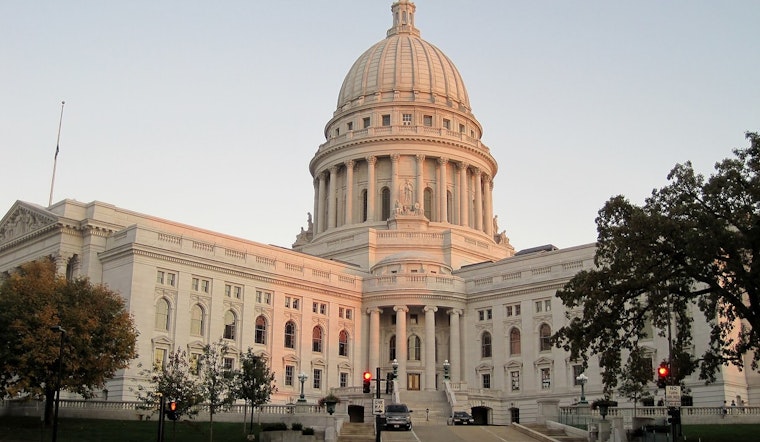
Republican leaders at the Wisconsin Capitol hit the brakes hard on Tuesday, briefly convening a governor-ordered special session on banning partisan gerrymandering and then instantly adjourning it, leaving the proposal hanging in procedural limbo. Democrats pushed for an immediate up-or-down vote on a constitutional amendment, while Republicans argued they need more time for public input and negotiations. The stalemate virtually guarantees nothing will move fast and keeps the fight over political maps squarely in the spotlight heading into the 2026 campaign season.
Floor clashes and direct quotes
Gov. Tony Evers urged lawmakers to adopt a straightforward constitutional amendment that would prohibit legislative maps from giving a disproportionate advantage to any political party. On the floor, he told legislators, "There’s nothing to negotiate because there’s no room for compromise when it comes to making sure Wisconsinites’ voices matter and their votes count." Democrats signaled they were ready to vote right away on that language. Republicans, by contrast, framed their move to adjourn as proof that talks are still underway rather than dead on arrival, according to FOX6 Milwaukee.
Republicans signal they want broader talks
Assembly Republicans kept the special session technically open, saying they want to hear from the public and work out what they describe as a broader, more workable plan instead of rubber-stamping the governor’s wording on the spot. Evers first floated the amendment idea in his State of the State address last month, then followed up with visits to local clerks on Monday to underscore his push for map reform. Those moves, along with the now-familiar Republican tactic of gaveling in and adjourning, were previewed in his final State of the State address.
How a constitutional amendment would reach voters
Under Wisconsin law, changing the state constitution is a marathon, not a sprint. Any proposed amendment must pass the Legislature in identical form in two consecutive sessions before it can even appear on a statewide ballot. Only then do voters get the final say in a referendum. That means even if lawmakers agreed on Evers’ plan this year, it would only be the first step in a multi-stage process before a ban on partisan maps could be locked into the state’s governing document. The full amendment process and its history are detailed by the Legislative Reference Bureau.
Why this matters politically
This latest showdown comes on the heels of high-stakes map fights and a flurry of court cases. Democrats flipped 14 state legislative seats under new maps enacted in 2024, and legal battles over Wisconsin’s congressional districts are still pending. Some redistricting analysts see the recent court rulings and election results as a rare opening for meaningful reform. Others warn that deep partisan mistrust could turn any attempt at a lasting deal into yet another front in the state’s ongoing political wars. The longer backstory on those legal and electoral battles is laid out by Wisconsin Watch.
What happens next
For now, the special session is technically still alive. Lawmakers could reconvene later this week to vote, float new language, or simply let the issue sit until the next legislative calendar. If they eventually approve a constitutional amendment in the same form across two successive sessions, the last word would belong to voters in a statewide referendum on whether to enshrine a ban on partisan gerrymandering. Until then, both parties are treating the map fight as a test of process and trust, with the political fallout likely to linger well beyond this week’s procedural theatrics.





.jpg)