

























































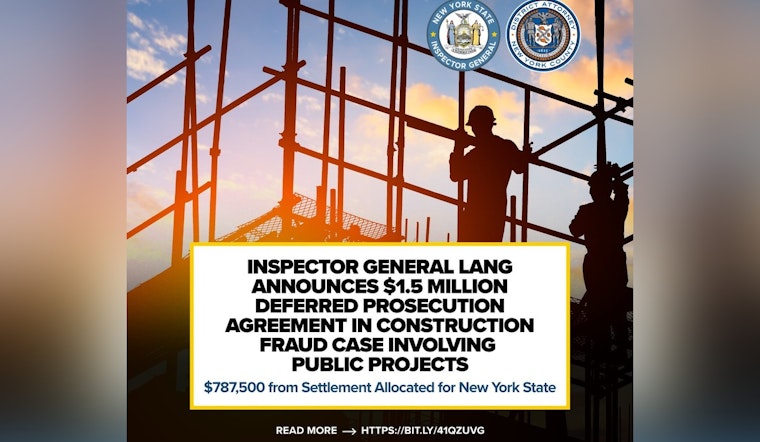
Vanguard Construction is paying a steep price in Manhattan, agreeing to a three-year deferred prosecution agreement and forfeiting $1.5 million after prosecutors accused the firm of a years-long overbilling scheme tied to city contracts. The resolution, announced Wednesday by Manhattan District Attorney Alvin Bragg, signals a continued focus on alleged fraud in public-works projects and how taxpayer money is spent on construction.
We are laser-focused on rooting out fraud in the construction industry, including the theft of taxpayer dollars. I thank our partners at the Inspector General’s Office for their work on this investigation. https://x.com/i/status/2041977020377125231
- Alvin Bragg (@ManhattanDA) April 8, 2026
In a post on X, District Attorney Bragg said his office is “laser-focused on rooting out fraud in the construction industry” and thanked the Inspector General’s Office for its work on the investigation. The post states that Vanguard entered into the three-year deferred prosecution agreement and forfeited $1.5 million after being accused of a years-long overbilling scheme, and Alvin Bragg offers the office’s public summary of the deal.
Prosecutors in Manhattan have a long history of targeting construction schemes in which contractors allegedly inflate invoices, falsify payrolls or route payments through sham subcontractors to siphon public funds. Charging documents in earlier investigations describe how padded change orders and M/WBE pass-through arrangements can hide overbilling and divert money from projects and legitimate subcontractors. Manhattan DA filings in prior cases spell out those tactics and the damage they can do.
Impact On City Contracts
Beyond the threat of criminal charges, construction firms that get caught up in these kinds of cases run straight into city contracting rules. New York City agencies and the comptroller’s office can suspend or debar companies that violate wage laws or procurement requirements, effectively cutting them off from public work for years at a time. Past enforcement shows that once a contractor is debarred, it can be a long road back to eligibility. The New York City Comptroller has used that power in several high-profile prevailing-wage and procurement cases.
How Deferred Prosecutions Work
According to the Manhattan DA’s internal guidance, deferred prosecution agreements are one of the tools prosecutors can use when charging a company outright might harm innocent employees or other third parties. The idea is to secure remediation and deterrence while keeping the business on a shorter leash rather than shutting it down entirely.
The specifics of each agreement vary. Terms can include financial penalties, compliance reforms, reporting obligations and, in some cases, the appointment of an independent monitor to keep an eye on things. Senior approval within the office is required before a DPA is offered, and the Manhattan DA policy outlines the factors that guide those decisions.
What Comes Next
For the next three years, Vanguard will be expected to live up to the compliance and reporting requirements spelled out in its agreement. If the company falls short, prosecutors can revive criminal exposure or city officials can pursue administrative penalties such as debarment from future contracts.
Officials say resolutions like this are meant to claw back taxpayer money and reshape corporate behavior in the long term. Whether the deal sends a broader message to the industry will depend on how aggressively prosecutors and procurement officials enforce its terms. Alvin Bragg and the DA’s filings will be the main public record to watch as the case moves from headline announcement into the quieter phase of monitoring and enforcement.





