

























































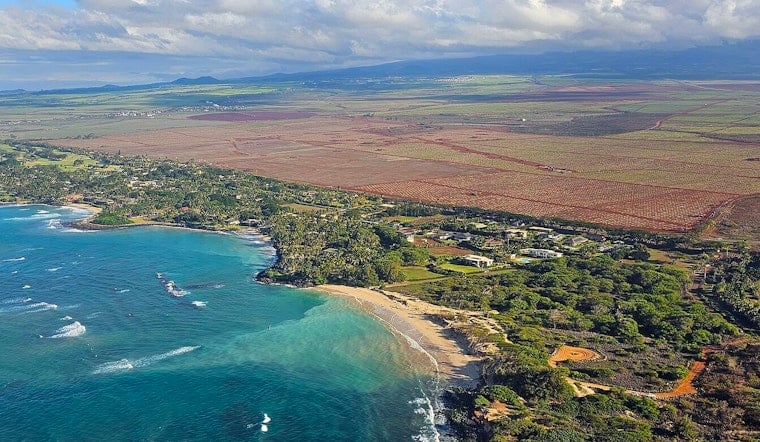
The Kaialahui Foundation’s Meaʻai Pono project has quietly grown into a food lifeline on Maui, doubling local production and moving more than 40,000 pounds of culturally rooted, locally grown food to families still recovering from the 2023 Lahaina wildfires. The expansion has increased cultivated acreage at Lā Kāhea in Waikapū and shifted harvests into weekly distributions for wildfire survivors and low‑income households. Organizers say the effort blends ancestral crops, upgraded equipment and close community coordination to keep fresh, culturally appropriate food flowing to local hubs.
Grant funding and equipment
Maui United Way provided the financial push that helped scale the program and invest in long-lasting equipment instead of quick fixes. According to Maui United Way, the nonprofit awarded a $50,000 grant to the Kaialahui Foundation to support Meaʻai Pono and other food‑security initiatives on Maui.
Production and distribution
As reported by Maui Now, the ramped-up project has grown, aggregated and distributed more than 40,000 pounds of kalo, ʻuala, ʻulu and maiʻa to local families, with weekly pickup spots that include Pōhaku Park in Lahaina and partner hub sites in Wailuku. “Every pound of food we grow and deliver represents hope and healing for a family still recovering,” Robert Pahia told Maui Now.
Since launching last year, Meaʻai Pono has doubled cultivation from roughly six acres to 12 acres at Lā Kāhea and has planted 100 native canopy trees to improve soil health and reduce heat‑and‑fire risk. A new mini excavator purchased with grant funds has been used to repair irrigation lines and sustain year‑round planting, helping the program move from emergency relief toward longer‑term food production, according to the Kaialahui Foundation.
Community hubs and data‑driven distribution
The program partners with resilience hubs and community organizations to get produce to people who need it most. The Living Pono Project, which facilitates a network of resilience hubs and operates a Waikapū food hub, is listed among distribution partners and says hub coordination helps stretch each harvest to reach hundreds of households a month.
Why this matters now
Maui’s food system remains in recovery after the 2023 fires, and demand for fresh, locally produced food continues to outpace pre‑fire levels. Reporting by Hawai‘i Public Radio shows food banks and nonprofits are investing in storage and distribution capacity to meet sustained need, and projects like Meaʻai Pono aim to keep more food rooted on Maui.
Organizers say the next steps are straightforward but resource intensive: maintain shared equipment, deepen school and hub partnerships, and keep building a local supply chain that honors culture while feeding families. For many residents, the steady boxes of kalo and ʻuala arriving at Lahaina distribution sites feel less like charity and more like a grounded, slow recovery, one harvest at a time.





