

























































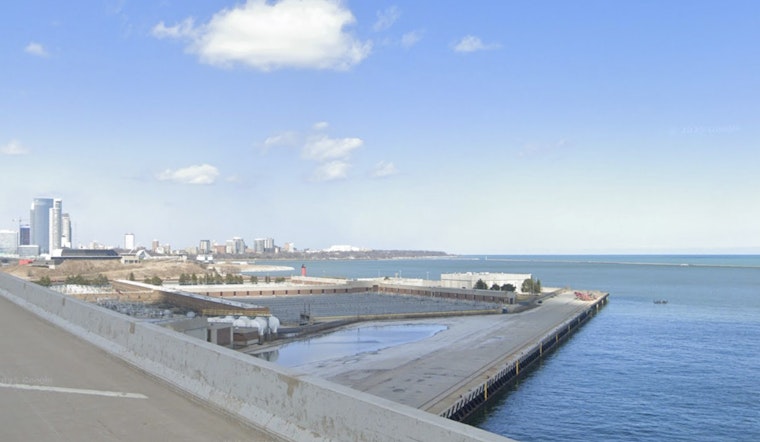
Milwaukee is carving out a massive new feature in its inner harbor: a 42-acre, concrete-and-steel basin built to swallow nearly 1.9 million cubic yards of contaminated sediment and keep it there for good. The dredged material management facility, or DMMF, is taking shape on Jones Island at Port Milwaukee, constructed by Michels under contract with the Milwaukee Metropolitan Sewerage District (MMSD) and partner agencies. Once it is capped and landscaped, the project is expected to keep polluted dredge material out of far-flung landfills and turn the new harbor-edge ground into land that can eventually be used by the public.
What’s Being Built
The facility spans about 42 acres and is engineered to safely hold roughly 1.9 million cubic yards of dredged material from the Milwaukee, Menomonee and Kinnickinnic rivers, according to the MMSD. The DMMF footprint is laid out along Jones Island near the Lake Express ferry docks, where port planning maps and public reports show the perimeter gradually closing in around the new basin, according to Port Milwaukee.
How It Works
After winning the construction contract, Michels moved in crews and equipment, driving piles, installing sheet piles and starting to assemble the containment walls and access structures, as reported by The Daily Reporter. Engineers are also building soil-mix cutoff sections by blending native soils with cement, slag and bentonite, then tying the whole system together with drainage, tie rods and vibro-compaction. It is a carefully sequenced job that involves hundreds of engineered cells and thousands of feet of structural wall, according to the Milwaukee Business Journal.
Why It Matters
The DMMF is a keystone in the U.S. Environmental Protection Agency’s long-running effort to clean up decades of contaminated sediment in the Milwaukee Estuary and resolve its formal Area of Concern designations, which currently restrict much of the dredging work that can be done, according to the EPA. Instead of hauling muck away by truck, the plan is to use vacuum-type dredging and hydraulic pumping to move sediment directly into the harbor basin, a setup that MMSD says will sharply cut truck traffic, save an estimated 1 million gallons of diesel and spare neighborhood streets from thousands of heavy loads.
Timeline And Next Steps
Construction has already progressed through pile driving and wall installation. The next phase focuses on interior drainage systems, dewatering and compaction, all of which must be in place before long-term filling operations can begin. Port briefings and engineering updates indicate that officials expect major construction to wrap up by late 2026, with EPA-led dredging ramping up as soon as the harbor storage capacity is ready, according to Port Milwaukee meeting minutes.
After The Basin
Project plans call for the filled cells to be capped and stabilized, after which the newly created land could be converted to public uses. One description pegs the basin’s total capacity as roughly equal to filling about 13 football fields to a depth of 50 feet. Keeping the contaminated sediment in a dedicated lakefront containment site is also intended to avoid thousands of landfill-bound truck trips and preserve remaining landfill and port space for future needs, as reported by the Milwaukee Business Journal.





