

























































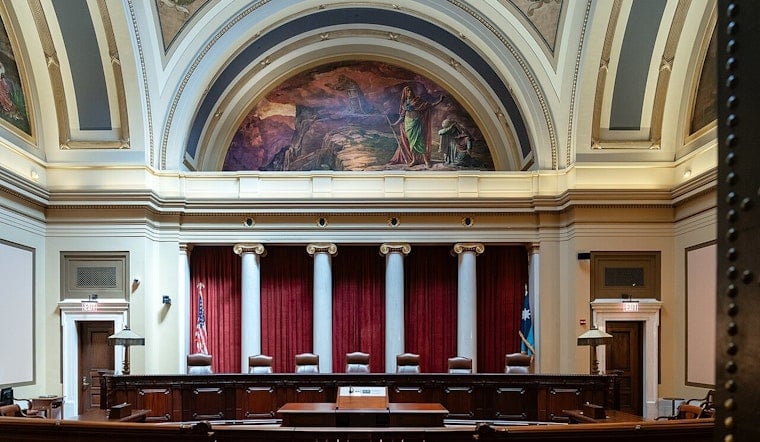
The Minnesota Supreme Court on Wednesday, April 29, 2026, refused to overturn Adam Fravel’s murder convictions in the death of Madeline Kingsbury, keeping his life sentence in place and effectively ending his state-level appeals in a case that drew intense public attention across southeast Minnesota.
High Court: Evidence Shows Premeditation
In a 43-page opinion, the court concluded that “when viewed as a whole… Fravel premeditated and intended to cause Kingsbury’s death and did so with extreme indifference to human life,” and denied his request for a new trial, according to the Star Tribune. The justices said the district court did not abuse its discretion by allowing expert testimony on patterns of domestic violence or the medical examiner’s opinion on the manner of death. Taking the witness accounts, police work and forensic findings together, the court found there was enough evidence to support what the jury decided.
How Kingsbury's Disappearance Unfolded
Madeline “Maddi” Kingsbury was reported missing on March 31, 2023, after dropping her two young children at daycare and never arriving at work. More than two months later, a Fillmore County deputy found her remains in a culvert near property maintained by Fravel’s family. Prosecutors said her body was wrapped in a bedsheet and that a towel was knotted around her head, which they argued showed homicidal asphyxiation, as reported by FOX 9. Investigators told jurors that Fravel was the last person known to have seen her alive before she disappeared.
Trial, Conviction and Sentence
The case was moved to Blue Earth County for trial, where a jury returned guilty verdicts on November 7, 2024, convicting Fravel of multiple counts including premeditated first-degree murder, according to coverage of the trial. On December 17, 2024, he was sentenced to life in prison without the possibility of parole, per CBS Minnesota. Prosecutors told jurors they had established motive, means and opportunity and presented testimony from friends, family and law enforcement about an abusive pattern.
What the Court Rejected on Appeal
On appeal, Fravel argued that the admission of domestic-violence evidence, certain expert testimony and hearsay statements unfairly prejudiced his trial and that some of the evidence fell short of proving premeditation. The Supreme Court disagreed and concluded that those rulings were either proper or not so prejudicial that they required reversing the convictions, as summarized in coverage of the opinion. The appeal was heard on January 8, 2026, at the State Capitol, according to the Minnesota Judicial Branch.
Community Aftermath
Kingsbury’s disappearance and the trial sparked months of searches and a regional outpouring of support. Her family and friends later created a foundation to support survivors and raise awareness about abusive relationships. The group’s work and local memorials have been reported alongside court coverage, and the family has said the ruling brings a measure of closure even as community efforts continue. The foundation’s materials describe its mission as helping others affected by domestic violence and honoring Kingsbury’s memory, according to the group’s website.
What Comes Next
With the state Supreme Court’s decision, Fravel’s direct appeals in Minnesota are finished. The remaining options would be federal review, such as a habeas corpus petition under 28 U.S.C. § 2254 or a petition for certiorari to the U.S. Supreme Court. Federal habeas review is tightly constrained by the Antiterrorism and Effective Death Penalty Act and requires exhaustion of state remedies and a high showing to overturn state-court adjudications, according to a Congressional Research Service overview on post-conviction federal review.




.jpg)