

























































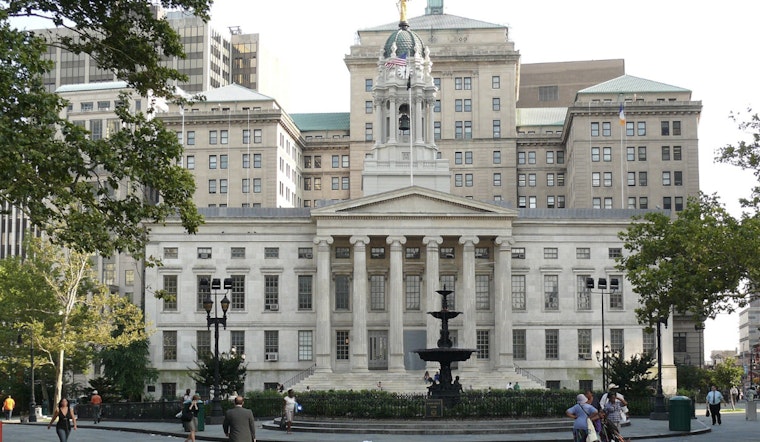
Dozens of CUNY faculty and staff gathered on the steps of Brooklyn Borough Hall on April 22, declaring a “state of emergency” over what they say are years of leaks, mold and mechanical breakdowns across the university system. Protesters held up photos and statements describing flooded libraries, crumbling ceilings and elevators that have repeatedly left students and staff stuck or shut out. Union leaders argued the problems are not scattered one-offs but part of a systemwide maintenance backlog that is disrupting classes, labs and basic access on multiple campuses.
Staff put problems on display
Several dozen staff members, joined by elected officials, drove the point home at the rally, as reported by Spectrum News NY1. Protesters cited mold and water damage at City Tech, frequent elevator outages at Kingsborough Community College, ongoing flooding and air-quality worries at Medgar Evers College, and leaks and HVAC failures at Brooklyn College. “We’re just at a point where we’ve realized we can’t sustain this anymore,” one staff member told the crowd.
A system-sized backlog
CUNY’s own budget paperwork lays out the scale of the problem. The university oversees roughly 300 properties and reports that a majority of its buildings are decades old, with many systems already beyond their useful life, according to CUNY. Its FY2025 budget request identifies a multibillion-dollar deferred maintenance backlog and seeks expanded annual appropriations, with a focus on HVAC, roofs, windows, elevators and other core infrastructure that keeps buildings usable.
Campus hotspots and union testimony
Union testimony and organizing have been compiling campus by campus accounts of problems, from mold in library stacks and water-damaged archives to construction dust and falling ceiling tiles. The Professional Staff Congress has called for immediate remediation in many of these spaces, according to PSC-CUNY. The union organized the April 22 speak-out and brought witnesses to a trustees hearing earlier in April, where they described persistent health and safety failures. Their testimony echoed the rally’s argument that many repairs so far have been short-term patches instead of permanent fixes.
Money and the plan
CUNY officials say the university has recently accelerated capital work and is trying to lock in more sustained funding. University leadership has highlighted roughly $850 million in recent facilities investment, and the FY2025 request asks for about $400 million per year for senior colleges and $200 million per year for community colleges to move buildings toward what it calls a state of good repair. The budget proposal frames that money as necessary to upgrade ventilation, replace roofs and windows, and pay for elevator and ADA improvements.
Officials press CUNY for answers
Brooklyn Borough President Antonio Reynoso, who joined the rally, called it “shocking” to see the condition of some campuses and said he plans to push CUNY leadership for explanations and solutions, according to Spectrum News NY1. CUNY has told reporters that health and safety remain a top priority and that the university will keep pursuing capital projects and new funding streams to tackle the backlog.
Why it matters
Advocates and prior reporting note that these building issues are chronic and can ripple far beyond cosmetic damage, affecting recruitment, retention and day-to-day classroom quality. Past coverage has linked deferred maintenance to enrollment declines and destroyed lab equipment, as documented by Gothamist. With CUNY’s budget request now out in public and trustees hearing detailed testimony, upcoming budget and oversight hearings will be the key venue to see whether promises of investment turn into long-term repairs instead of more temporary fixes.





