

























































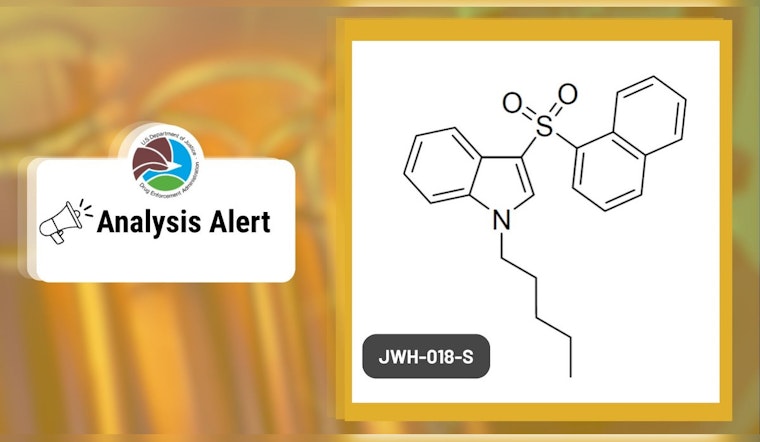
Federal drug agents say lab testing has put a name to a mystery liquid seized in Washington, identifying the substance as JWH-018-S, a synthetic cannabinoid found packaged in small vials. The Drug Enforcement Administration says its chemists flagged the compound after examining samples from a recent Washington seizure. The liquid finding in bottles has quickly pulled in attention from public health and law enforcement officials, since synthetic cannabinoids can be far more potent and unpredictable than natural cannabis.
In a post on its national account, the DEA said the material was identified as “JWH-018-S” and that ten bottles filled with liquid were recovered, according to DEAHQ on X. The agency’s Seattle division shared the notice as an “AnalysisAlert,” suggesting the seizure could signal that a new product is entering the illicit market.
A Quick Primer on JWH-018 Compounds
JWH-018 is part of a larger group of synthetic cannabinoids that target the brain’s cannabinoid receptors but often produce stronger and less predictable effects than Δ9-THC. As outlined in the DEA, JWH compounds have turned up in herbal “spice” products and are controlled under federal law.
Why Health Officials Are Watching Closely
Public health experts point out that synthetic cannabinoid products have previously triggered severe and sometimes life-threatening outbreaks. One example was a 2018 multistate cluster tied to products contaminated with rodenticide that led to hospitalizations and deaths, according to the CDC. The Washington Poison Center has long warned that “K2” or “spice” exposures can cause agitation, seizures, rapid heart rate and other serious symptoms, and it urges both clinicians and the public to treat these products as hazardous.
What We Still Do Not Know
The DEA post did not include key details such as where in Washington the seizure occurred, whether anyone was harmed, or whether the bottles were meant for vaping or some other use, according to DEAHQ on X. Typically, agencies release fuller forensic reports and local notices as investigations move forward, and public health partners may issue clinical guidance if exposures are reported.
How Officials Say You Can Stay Safe
If you come across suspicious liquids or unlabelled vaping products, officials advise that you avoid handling or tasting them and contact local public health authorities or the Washington Poison Center at 1-800-222-1222 for guidance, per the Washington Poison Center. Seek emergency care or call 911 if someone develops severe symptoms such as seizures, bleeding, trouble breathing, or loss of consciousness.
Legal Stakes Around JWH-018-S
JWH-018 and many similar synthetic cannabinoids are listed as Schedule I substances under federal law, and possession, distribution or manufacture can carry serious criminal penalties, according to the DEA. If JWH-018-S turns out to be a new analog, prosecutors and regulators will assess whether it is already covered by existing scheduling or whether additional controls are needed.
The DEA alert is an early reminder that illicit drug markets keep evolving and that new chemical variants can surface in unexpected forms. This story will be updated if federal or local agencies release additional forensic results or public health advisories.





