

























































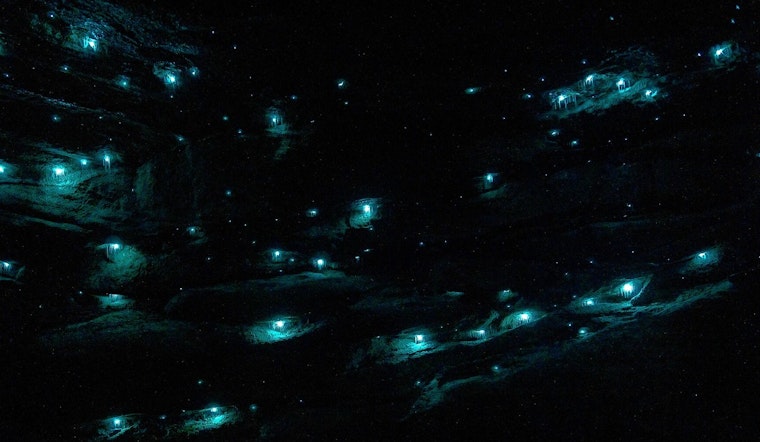
A rare neon-green mating display by tiny bioluminescent fireworms lit up the water off Long Beach on Sunday night, and beachgoers were quick to capture the spectacle on video. For a brief window, shifting ribbons of light swept across the surface, turning a stretch of shoreline into something that looked more sci-fi than Southern California. Scientists say the eerie glow is actually a tightly choreographed spawning ritual that follows the rhythm of the moon.
According to ABC7 Los Angeles, the clip is only the second known recording of this kind of event in Long Beach. Experts told the station that the worms rise from the seafloor during certain moon phases and swim to the surface to spawn, with females lighting up a mucus trail that draws in the males. ABC7 reports that the entire performance usually wraps in about 30 minutes before the worms sink back down, rebuild their tubes, and wait for the next round in the lunar cycle.
How the glow works
Researchers who study bioluminescent annelids describe the fireworm show as a deliberate mating signal, not a series of random flashes. A review in Integrative and Comparative Biology outlines how females rise after sunset and swim in circles while secreting a bright green luminous mucus that contains eggs. Males respond with quick flashes of their own, and fertilization happens in the water column. The scientific literature ties these swarms to specific points in the lunar cycle and notes that for many species the light display clocks in at roughly half an hour.
Seen along the SoCal coast
Similar fireworm light displays have been spotted up and down the Southern California coast in recent years, routinely setting off bursts of social media posts and local news coverage. LAist quoted Scripps Institution of Oceanography researcher Dimitri Deheyn as saying that fireworms "need to have warm water, but also still water," and he cautioned that warming oceans could make these nighttime events more frequent. Deheyn also told LAist the glows usually appear around 45 minutes after sunset and that the mucus itself is harmless to human skin.
When to look - and a caution
For anyone hoping to see the phenomenon, scientists suggest watching calm bays and harbors on quarter-moon nights, roughly 30 to 60 minutes after sunset, when swarms are most likely to rise. They also emphasize that fireworm displays are biologically different from the bright blue "waves" created by dinoflagellate plankton. Some plankton events are part of harmful algal blooms and can pose health risks to people and pets. For guidance on algal-bloom risks and safety, see the San Francisco Bay Regional Water Quality Control Board.





