

























































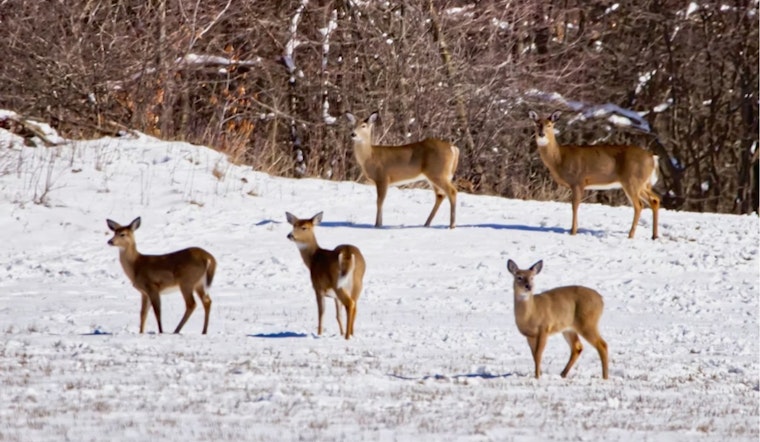
A winter deer cull across three south Oakland County suburbs quietly removed 70 white-tailed deer from Farmington, Farmington Hills, and Southfield, in a coordinated push to cut car crashes and give battered natural areas a breather. The operation yielded roughly 2,300 pounds of venison that was processed and donated to local food banks. Federal sharpshooters and permitted archery hunters worked overnight on city-owned land, out of public view, with officials saying the goal is to reduce vehicle collisions, curb ecological damage, and limit landscape loss from constant browsing.
According to The Detroit News, the U.S. Department of Agriculture effort removed 70 animals and produced about 2,312 pounds of venison, enough for more than 9,240 meals. The Southeast Michigan Urban Deer Coalition said the regional strategy reflects the reality that deer move freely across municipal boundaries, the outlet reported. City leaders have framed the work as a tightly focused, data-driven pilot that will be scrutinized before anyone signs off on a repeat.
How the regional program worked
Farmington Hills took the lead for the three cities and contracted with the U.S. Department of Agriculture Wildlife Services to supply trained sharpshooters, according to the Farmington Hills City Council meeting packet. Using thermal imaging gear and elevated shooting positions, the team made targeted nighttime shots on closed city property. Harvested deer were transported directly to processors under state rules.
Why officials moved forward
Local officials and wildlife managers said they turned to lethal control based on public safety data and habitat concerns. A report to the Farmington Hills City Council cited 621 vehicle collisions with deer over five years, a number that has loomed large in local debates. The Michigan Department of Natural Resources recommended a regional, multi-tool strategy as a supplement to traditional hunting seasons and ongoing public education, according to city officials.
Meat for food banks
According to The Detroit News, venison from the cull was processed with help from local volunteer groups, then distributed to area food banks. Organizers estimated roughly 2,312 pounds of meat, translating to more than 9,240 meals. Officials said the meat handling and distribution followed state health and processing standards. Supporters argue the donation model allows the program to deliver a community benefit while offsetting some operational costs.
Local pushback and alternatives
Opposition never really went away. Residents and wildlife advocates pressed the cities to focus on nonlethal tools, including deer sterilization and stricter enforcement of feeding bans, during months of public meetings. Advocates for Michigan Wildlife labeled the Farmington Hills decision "flawed" and urged officials to halt culls while other options were fully explored.
Costs and next steps
Cities put their first-year price tags in the ballpark of 10,000 to 20,000 dollars each, according to council documents. Post-cull recommendations include opening more private parcels to future efforts, testing urban archery, tightening enforcement of deer-feeding bans, and continuing community outreach and education, the report states. Officials say they will track collision numbers and ecological indicators before deciding whether to schedule another round, and other southeast Michigan municipalities have already expressed interest in the regional model.
For now, the results have left neighborhoods split, with some residents relieved and others outraged. City leaders say they plan to keep releasing data, adjust tactics as needed, and publish a formal after-action summary on impacts and next steps in the coming weeks.





