

























































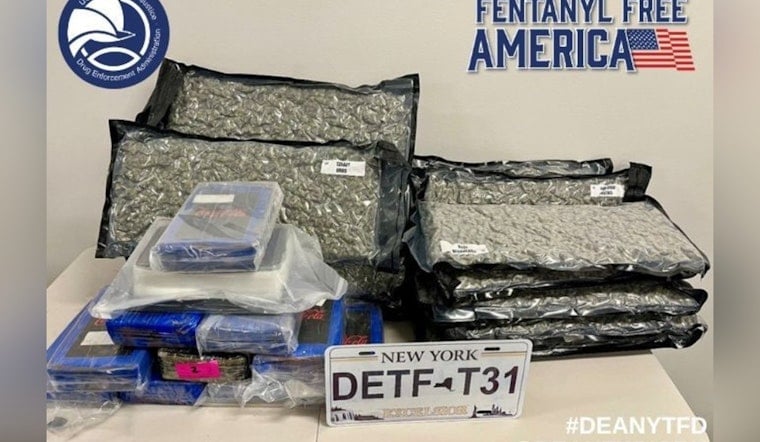
A federal drug task force in New York says it cut into the city's fentanyl pipeline this week, arresting one person and seizing roughly 13 kilograms of suspected fentanyl along with about 8 kilograms of marijuana. Officials described the bust as a coordinated hit by the DEA New York Task Force Division and local partners aimed at disrupting high-volume drug shipments into the city, but they released only a brief social-media update with no name, address, or time stamp on the arrest.
According to DEANewYork, the Task Force Division "made one arrest" and "seized approximately 13 kilos of suspected fentanyl, & 8 kilos of Marijuana" and credited partners including the NYPD, the New York State Police and the Office of the Special Narcotics Prosecutor for the City of New York. The agency posted a short transcript attachment, and for now that social post is doing the heavy lifting as the public explanation of what went down.
Task Force Surge Shows Big Intercepts
The New York seizure fits into a broader surge of task force activity in recent months. As reported by DEA, Phase II of the agency's Operation Fentanyl Free America removed more than 4.7 million fentanyl pills and nearly 2,396 pounds of fentanyl powder nationwide in January and February 2026, with New York alone accounting for hundreds of thousands of pills and roughly 165 pounds of powder during that period.
Details Remain Limited
Updates like Tuesday's are designed to flag a big seizure quickly, but they rarely spell out much investigative detail, no criminal charges, complaint, or precise scene information appeared in the public post. As reported by short social updates, the agency often uses quick-hit posts to announce seizures before a fuller press release or charging documents see daylight.
Legal Steps Likely To Follow
If prosecutors move ahead with charges, the next steps typically involve scientific testing to confirm the seized substances, followed by filings in either federal or state court. In a recent New York case involving a Bronx packaging mill, lab-confirmed results and grand jury action preceded arraignments, illustrating the usual path from seizure to formal prosecution. As outlined by DEA, that process can take weeks as evidence is tested and charging decisions are finalized.
Public Health Stakes
Public-health officials say this kind of haul matters because fentanyl is now the most common drug involved in fatal overdoses. According to NYC Health, fentanyl was detected in roughly 80 percent of overdose deaths in 2023, a reminder that even relatively small amounts of powder on the street can translate into thousands of potentially lethal doses.
At the time of the agency's post, that social update remained the main public record of the operation, and local prosecutors or task force partners had not released a detailed account. We will be watching court dockets and future agency statements for charging documents, suspect information, and a clearer timeline of how this case unfolds.





