

























































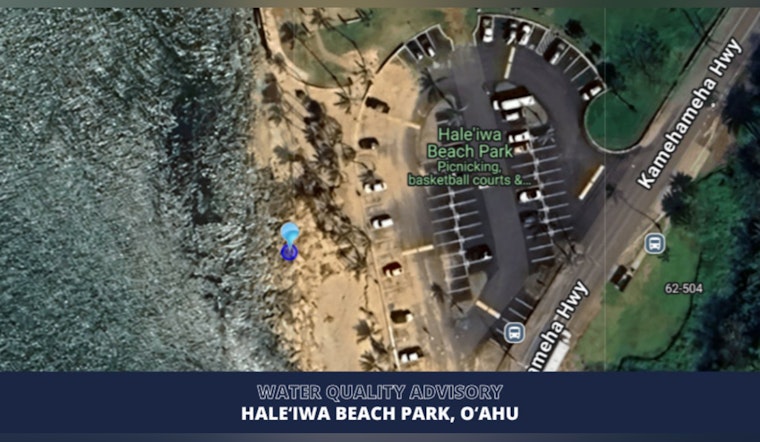
Haleʻiwa Beach Park on Oʻahu’s North Shore is under a water-quality advisory after routine testing turned up elevated levels of enterococci bacteria. The Hawaiʻi State Department of Health is warning that the results suggest potentially harmful microorganisms could be in the water, and officials are urging people to hold off on swimming, wading or any direct contact until follow-up tests are finished. Lifeguards and park staff are expected to keep warning signs posted at the beach until the Clean Water Branch clears the advisory.
What The Advisory Says
According to the Hawaiʻi State Department of Health, the advisory was issued Wednesday after routine sampling at Haleʻiwa Beach Park recorded an enterococci exceedance. The notice warns that the reading could indicate that "potentially harmful microorganisms may be present" in the water. Health officials say additional samples will determine whether the advisory can be lifted or needs to stay in place. The department’s post points people to the Clean Water Branch notification system for ongoing updates.
How The Testing Works
Enterococci are used as a fecal-indicator bacterium, which means they help flag possible sewage or runoff contamination in coastal waters. Federal guidance sets threshold values and a Beach Action Value approach that local programs use to decide when to notify the public. As outlined in the EPA's 2012 Recreational Water Quality Criteria, states rely on benchmark numbers and resampling in order to protect swimmers.
Per the Hawaii DOH Clean Water Branch, any exceedance like the one seen at Haleʻiwa triggers confirmatory sampling, warning signs at the beach and email notifications to subscribers. Those steps stay in place until new readings show bacteria levels have dropped back to acceptable levels.
What Swimmers Should Do
Until follow-up testing clears Haleʻiwa Beach Park, health officials say the safest move is to stay out of the water and to keep pets off the shoreline as well. Recreational water illnesses linked to contaminated surf can cause gastrointestinal issues along with skin, ear and eye infections, and symptoms can show up within a few days of exposure.
For more on how to cut your risk in the ocean and what to watch for if you start feeling sick after a beach day, check guidance from the CDC.
Local Context
This latest alert lands in the middle of a messy season for Oʻahu’s North Shore, which has already seen brown-water advisories and related boil-water notices tied to storms and runoff. Those kinds of conditions commonly push bacteria and other contaminants from land into nearshore surf zones.
Hawaii News Now reported that a boil-water notice hit parts of the North Shore in late March, and Haleʻiwa has faced high-bacteria alerts in past years, according to the Honolulu Star-Advertiser. Taken together, it is not hard to see why the Clean Water Branch leans heavily on resampling and public notification whenever the numbers spike.
Where To Get Updates
The Clean Water Branch keeps an online notification tool that posts beach advisories as new test results come in, and DOH also pushes out alerts on its social account. Before you pack up for Haleʻiwa Beach Park, check the Hawaii DOH Clean Water Branch page for maps and the latest status, and look at the department’s social posts for any fresh advisories.
Once you are on site, heed the warning signs and follow instructions from local officials while authorities continue to investigate and resample the water.





