

























































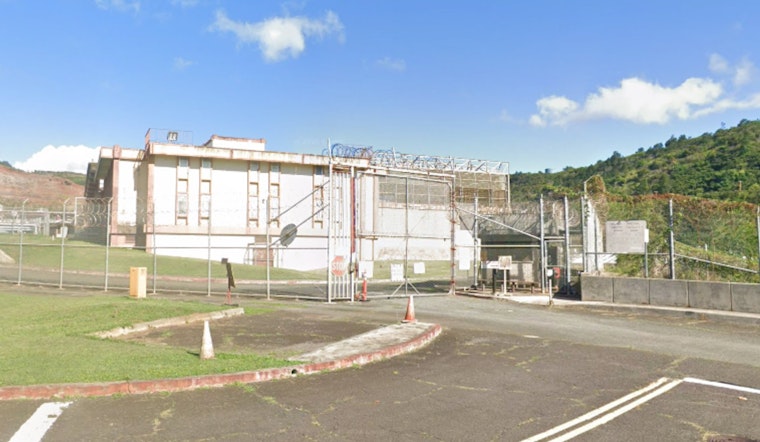
An Oʻahu corrections worker is accused of turning inmate out-processing paperwork into a personal ATM, after prosecutors say she lifted a credit card from a prisoner and used it before the bank could shut it down. Authorities allege the card held about $8,960, and that roughly $500 was withdrawn in cash before it was deactivated. The employee, identified as Julianne Kaniaupio, is scheduled for arraignment next Monday, April 27, at 8:30 a.m.
According to Hawaii News Now, the state Department of the Attorney General said Kaniaupio was charged on April 8 after an investigation into alleged misconduct at Halawa Correctional Facility. Prosecutors filed multiple counts, including fraud; two counts of official misconduct; credit card theft and fraudulent use of a credit card; unauthorized possession of confidential personal information; attempted theft in the second degree; identity theft in the third degree; and theft in the third degree. Charging documents allege she used her position to pull the card from an inmate’s out-processing paperwork and then make unauthorized transactions.
“Public servants are entrusted with significant responsibility and any abuse of that trust … will be investigated and prosecuted,” Attorney General Anne Lopez said, as quoted by Hawaii News Now. The Attorney General’s office is handling the case, and the outlet reports the charges were filed through the office’s investigative division.
How Prosecutors Say It Went Down
Prosecutors allege Kaniaupio exploited her access during the release process to remove an active credit card from an inmate’s out-processing paperwork, then used it for purchases and a cash withdrawal before it could be shut off. Public payroll records list a Julianne Kaniaupio as an Office Assistant with the Hawaii Department of Public Safety, a job that can involve handling administrative release paperwork. Those details form the backbone of the case assembled by the Attorney General.
The Prison At The Center Of The Case
The alleged misconduct occurred at Halawa Correctional Facility on Oʻahu, the Department of Corrections and Rehabilitation’s largest prison complex. The department notes that Hālawa includes a medium-security unit and a separate special-needs facility, and it handles both intake and out-processing for inmates. More information on the prison is available from the Department of Corrections and Rehabilitation.
Why The Attorney General Is Taking The Lead
The Attorney General’s Special Investigation and Prosecution Division, or SIPD, is assigned to dig into corruption, fraud, and economic crimes that involve public employees. A recent release from the Department of the Attorney General details SIPD’s role in pursuing misconduct by state workers and highlights a public tip portal for reporting suspected wrongdoing. For more on the division’s work and how to report concerns, see the Department of the Attorney General.
What Happens In Court Next
Kaniaupio’s upcoming arraignment will be the court’s first formal step to take up the charges and set any pretrial conditions. Under Hawaii law, identity theft in the third degree is a class C felony, according to the Hawaii Revised Statutes, and class C felonies carry an ordinary maximum prison term of five years under HRS §706-660. Penalties for the remaining counts vary by statute and would be determined if the case goes to trial or ends in a plea.
Prosecutors have not released further details, and Kaniaupio remains presumed innocent unless and until proven guilty in court. Members of the public who have information about suspected public-sector corruption can use the Attorney General’s Submit a Tip portal, as referenced in the Department of the Attorney General release.





