

























































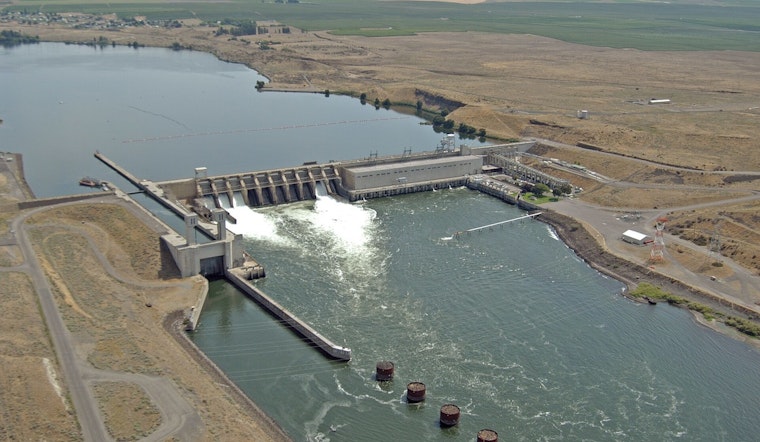
On Feb. 25, a federal judge in Oregon ordered eight big federal dams on the lower Columbia and Snake rivers to spill more water, giving endangered salmon and steelhead a better shot at surviving their journey to the ocean. The interim changes are designed to help juvenile fish ride water over the dams instead of getting pushed through turbines during the crucial spring and summer migrations, and they will stay in place while a much larger legal fight plays out.
U.S. District Judge Michael H. Simon warned that the basin’s salmon are “disappearing from the landscape,” and extended his order to Ice Harbor, Lower Monumental, Little Goose and Lower Granite on the Snake River, plus Bonneville, The Dalles, John Day and McNary on the Columbia, according to the AP. His injunction blocks the federal defendants’ proposed 2026 operating plan and directs higher spill during key out‑migration months while the court decides whether long‑term operations pass legal muster.
What the order requires
Simon’s ruling calls for increased spring‑and‑summer spill at all eight dams but pointedly keeps reservoir elevations roughly where they were last year instead of ordering broad drawdowns. Plaintiffs and fisheries groups describe that move as a tactical choice meant to quickly cut juvenile mortality while still leaving dam operators a bit of flexibility, according to Save Our Wild Salmon.
Tribes and advocates welcomed the decision
Tribal leaders, fishing groups and conservation lawyers framed the order as a desperately needed brake on what they say has been a steady slide toward extinction for several Columbia‑Snake fish stocks. Advocates including Earthjustice and Save Our Wild Salmon applauded the speed of the court’s response, arguing that the ruling buys time while tribes, states and federal agencies wrestle with longer‑term solutions, as reported by OPB.
Utilities and ports warn of costs
On the other side, public‑power advocates and inland ports are sounding alarms about what the ruling could mean for electricity bills and navigation along the 465‑mile river corridor that underpins a major chunk of Northwest commerce. The Seattle Times reports that the Bonneville Power Administration has told regulators the new spill regime could run about $140 million a year. A separate BPA market analysis projected a potential $221 million annual increase tied to a market change scheduled for October 2028.
Opponents, including the Inland Ports and Navigation Group, also argue that higher spill can push dissolved‑gas levels up to stressful levels for fish and create headaches for barging and river commerce, according to the AP.
Legal implications
The order functions as a preliminary injunction in National Wildlife Federation v. National Marine Fisheries Service and sets the rules for interim dam operations while the court reviews whether federal biological opinions comply with the Endangered Species Act. Legal analysts say the ruling effectively resets short‑term operating standards and will likely trigger appeals and additional filings as agencies and utilities argue for reliability and navigation carve‑outs, according to the Columbia Basin Bulletin.
What comes next
Plaintiffs highlighted that the court’s spill schedule is structured to hit the 2026 juvenile out‑migration, with the order slated to take effect March 1, 2026, and the parties asked to propose a schedule to fully resolve the case. At the same time, BPA’s ongoing market and rate decisions, coupled with a policy timeline that stretches into 2028, all but guarantee that fights over costs, grid reliability and replacement resources will continue in regional planning forums and on Capitol Hill, according to the Seattle Times.
For communities across the Northwest, the ruling lands as both a short‑term lifeline for struggling fish and the opening move in a renewed battle over rivers, barges and power bills. Scientists and tribal leaders also stress the broader ecological stakes: Columbia‑Snake Chinook are a key prey source for endangered Southern Resident orcas, a reminder that what happens at these dams ripples far down the coast, according to the Puget Sound Partnership.


.jpg)