

























































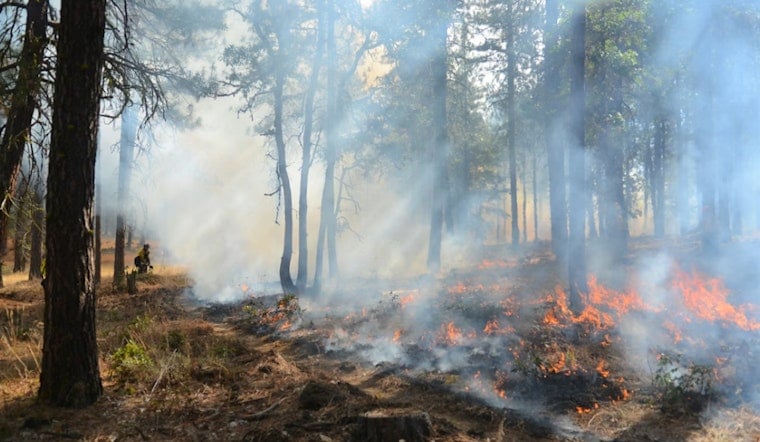
Some of Oregon’s most influential business voices are now talking about wildfire mitigation as economic policy, not just crisis response. Wildfire consultant Matt Donegan is leading a push that says sharper investments in home hardening, utility upgrades and targeted forest restoration could protect jobs, keep employers from scouting other states and rein in the sky‑high costs of fighting and cleaning up after major blazes. In this view, wildfire spending becomes prevention that pays for itself over time by stabilizing insurance markets, the workforce and supply‑chain risk.
According to the Portland Business Journal, Donegan has been tapped by the Oregon Business Council to model how scarce public and private dollars could be divided among home hardening, utility infrastructure and forest restoration. The goal is a clear cost‑benefit framework that policymakers and employers can use when weighing investments that supporters say could make Oregon more competitive for new corporate expansions and relocations.
Donegan, who chaired the Governor’s Council on Wildfire Response in 2019, has told OPB that roughly 13.1 million acres of Oregon are at elevated wildfire risk. In coverage reported by Willamette Week, he put the 20‑year mitigation price tag at about $7.7 billion and noted that the state spent roughly $350 million fighting fires in 2024.
Why businesses care
Site selectors and major employers are increasingly factoring climate and disaster risk into decisions about where to put jobs, and Oregon’s business‑planning forums have elevated wildfire mitigation as a competitiveness issue. The Oregon Business Plan recently featured panels that folded wildfire mitigation directly into economic strategy. National analyses warning that climate risk threatens insurance and housing markets, including a report from the Joint Economic Committee, reinforce the idea that wildfire vulnerability can shape firms’ cost calculations and access to capital.
Where the money would go
Earlier state work divided mitigation into three main buckets, home hardening, landscape restoration and safer response systems, and a 2019 Governor’s Council report identified about 5.6 million acres for priority treatments with multibillion‑dollar costs, as detailed in that report. Recent rulemaking and the Oregon Public Utility Commission’s mitigation workshop series show that grid upgrades and vegetation management are already part of the plan, outlined in the governor’s Wildfire Programs, the full Governor’s Council report and the PUC workshop archive.
Challenges: workforce, policy and scale
Donegan and others warn that the barriers are not only financial. Workforce attrition, the need for biomass processing infrastructure and regulatory hurdles such as NEPA review and litigation can slow projects and make private capital wary. Coverage on OPB underscores that any long‑term plan has to pair funding with operational guarantees if Oregon wants investors to stick around.
For Oregon, the pitch is straightforward: treat wildfire mitigation as infrastructure investment and local economic policy, not just emergency spending. Business leaders and policymakers are only beginning to build the spreadsheets to test that theory, but if the numbers pencil out, mitigation could turn into a selling point for companies choosing where to locate instead of just another expense line on their balance sheets.





