

























































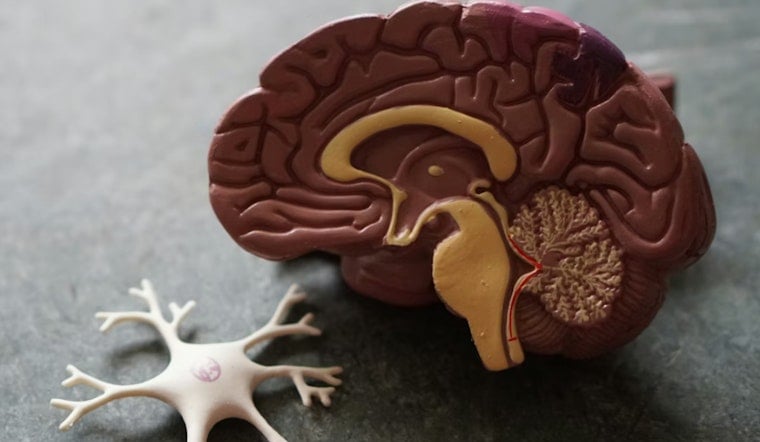
A new Penn State study finds that tiny core contractions, the small tensing you do when you stand up or take a step, physically nudge the brain inside the skull and may help "swoosh" cerebrospinal fluid to clear metabolic waste linked to dementia. The results, drawn from mouse experiments and computer simulations, offer a potential mechanical explanation for long observed cognitive benefits of regular movement.
Study Finds a Hydraulic Link Between Abdomen and Brain
In a paper published in Nature Neuroscience, researchers used high-speed two-photon microscopy and micro-CT in head-fixed mice to track tiny dorsal cortical displacements during locomotion. They report that brain motion is tightly time-locked to abdominal muscle contractions, and that the vertebral venous plexus can transmit pressure from the abdomen to the spinal canal, producing a gentle rostral-lateral sway of the brain. Computer models in the study suggest that those repeated micro-displacements can drive interstitial and cerebrospinal fluid (CSF) through brain tissue and into the subarachnoid space.
How the Team Tested the Effect
The researchers confirmed the mechanism by applying controlled abdominal pressure to lightly anesthetized mice and watching the brain shift in the same pattern, then snap back to baseline as soon as the pressure was released. The team reports that the motion arises when blood is pushed into spinal veins and the dural sac is transiently squeezed, nudging cerebrospinal fluid along the brain’s surface. “Our research explains how just moving around might serve as an important physiological mechanism promoting brain health,” Drew told Penn State.
Models Show Motion Can Drive Fluid Out of the Brain
The Nature Neuroscience paper pairs the imaging with computational models that treated the brain like a “dirty sponge” and found that repeated micro-displacements could push interstitial fluid through tissue and into the subarachnoid space, potentially accelerating waste clearance. That modeled flow runs opposite the bulk CSF movement reported during sleep, suggesting movement and sleep may clear waste via different mechanisms. The authors note that the simulations simplify brain geometry and that direct measures of toxin clearance in living humans remain outstanding.
What It Does Not Prove
The work is a mouse study supported by computer simulations, not a demonstration that movement prevents Alzheimer’s in people. Penn State and the paper's authors stress that human validation is required before translating the proposed mechanism into clinical advice. “Further work is needed to understand the full implications in humans,” the researchers said to Penn State.
Why Scientists Think This Matters
The public-health stakes are high: the Alzheimer’s Association projects that nearly 13 million Americans could be living with Alzheimer’s by 2050, so any mechanism that might help clear protein waste attracts attention. Local outlets picked up the paper's accessible framing; as FOX 13 Seattle put it, simple movements can "swoosh" CSF around the brain. For now, researchers say the finding reinforces existing public-health advice to stay active while further studies test how much and what types of movement matter for brain clearance.





