

























































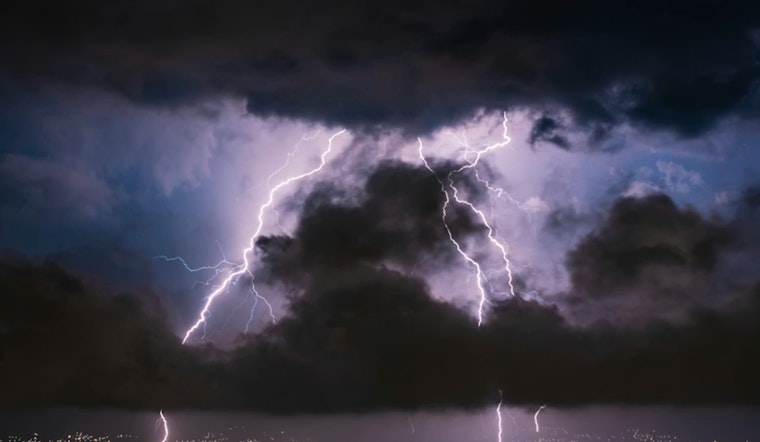
A bruising band of severe thunderstorms ripped across parts of southeast Wisconsin Friday evening, triggering a National Weather Service severe thunderstorm warning and urgent shelter calls from local agencies. The fast-moving line charged east at roughly 30 mph, packing the potential for very damaging wind gusts and ping‑pong‑ball‑size hail. Police and emergency managers urged residents to stay off the roads and head to interior shelter while the storms rolled through.
Where the line tracked
As posted by the Waukesha Police Department, the warning covered Walworth County, eastern Rock County, southwestern Waukesha County and southeastern Jefferson County, and specifically listed communities including Beloit, Whitewater, Elkhorn, Delavan, Lake Geneva, Mukwonago, East Troy, Williams Bay, Genoa City and Walworth. The department said radar showed storms along a line stretching from near North Prairie to near Clinton, moving east at about 30 mph. Local alert aggregators tracked the same watches and warnings across southeast Wisconsin throughout the evening.
Hazards and official advice
According to National Weather Service Milwaukee/Sullivan, the storms were capable of producing wind gusts up to 70 mph and hail the size of ping‑pong balls, with the warnings based on radar indications. Forecasters advised residents to move to an interior room on the lowest floor of a building or head to a basement if a tornado is spotted. The NWS warned the storms could injure people and animals caught outside, damage roofs, siding, windows and vehicles with hail, and cause considerable tree damage.
How to stay safe
Waukesha County emergency officials reminded residents to keep more than one way of receiving warnings, including NOAA Weather Radio, television and wireless alerts, and not to rely only on outdoor sirens when indoors, in line with the county's preparedness guidance. Anyone with storm damage or an urgent safety issue was told to contact local police or call 911 for immediate help.
Where this fits in the spring pattern
The late‑Friday warnings were part of a busy mid‑April stretch of severe weather across the Midwest that produced numerous large‑hail and damaging‑wind reports earlier in the week, according to AP News. Meteorologists urged residents to keep following official updates and to share damage reports and photos with local authorities and the NWS to help verify what the storms left behind.





