

























































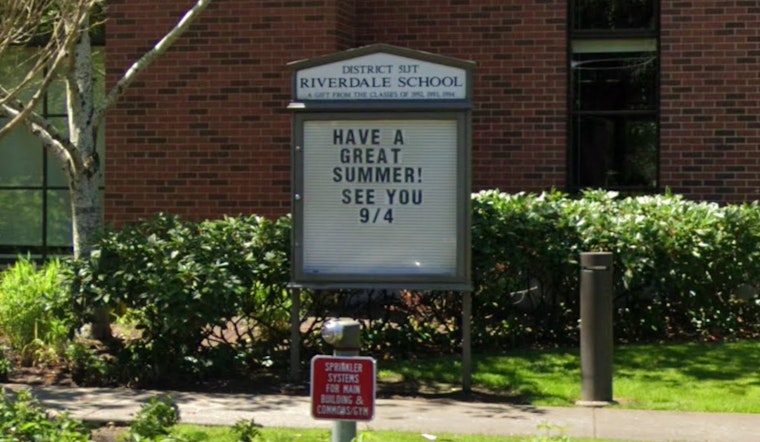
Two Portland-area school districts say they are down to a stark choice on the May 19, 2026 primary ballot: raise local property taxes or brace for major cuts to classrooms. Riverdale School District 51J and Canby School District No. 86 are asking voters to approve five-year levies that district leaders say would help preserve teachers, school days and programs as inflation climbs and state funding stays mostly flat.
Riverdale seeks rate increase to keep teachers in classrooms
Riverdale’s Measure 26-263 would replace the district’s expiring levy with a five-year local option tax set at $1.67 per $1,000 of assessed value, projected to raise about $7.53 million over five years. According to Multnomah County Elections, the district estimates that losing the levy would cost more than $1 million in 2026-27, which it describes as roughly equal to seven teacher positions or around 21 school days. The district says those local dollars help keep class sizes small and pay for programs such as its International Baccalaureate offerings, according to the Riverdale School District.
Canby asks voters to fill a $6.3 million hole in next year’s budget
Canby’s Measure 3-636 would levy $1.50 per $1,000 of assessed value and is estimated to generate about $5.9 million in its first year and roughly $31.5 million over five years, according to the district’s explanatory statement. That statement says the district has already trimmed its budget by about 11% yet still faces a projected $6.3 million shortfall in 2026-27. Without the levy, the district warns that roughly 60 teaching and support positions could be eliminated, music and career and technical education offerings could be reduced, and school consolidation could be on the table.
The county voters’ pamphlet also includes an argument in opposition from the Taxpayers Association of Oregon, which calls 3-636 “one of the larger property taxes in all of Oregon,” according to the Clackamas County Voters’ Pamphlet.
Why levies keep showing up on ballots
Across Oregon, districts rely on local option levies to help close the gap between what the state’s school funding formula provides and what they say it actually costs to run day-to-day instruction. Operating levies for schools are typically limited to five years under state law. Local school boards commonly cite ORS 280.040 et seq. when putting such measures on the ballot and describe the revenue as essential for keeping staff and programs that state dollars alone do not cover. The same legal structure and budget role appear in larger districts such as Portland Public Schools.
What voters are weighing
Supporters pitch these measures as targeted investments in neighborhood schools, with time-limited, audited revenue that is meant to stick close to the classroom. Opponents counter that property tax hikes fall hardest on homeowners and question why districts with fewer students still need more local money. The Taxpayers Association of Oregon’s opposition statement in the Canby pamphlet points to a roughly 10% enrollment drop and asks why taxpayers should face a larger bill as district rolls shrink, a line that appears in the county voters’ pamphlet. Voters will sort through those dueling arguments when ballots arrive.
How and when to vote
Ballots for the May 19 primary are scheduled to be mailed beginning April 29, and the deadline to register or change party affiliation is April 28. Ballots must be returned or postmarked by Election Day. County elections offices and the county voters’ pamphlets provide sample ballots, explanatory statements and pro and con arguments for each measure, while Multnomah County and Clackamas County webpages list local voting resources and key dates for residents. See Multnomah County Elections for details on mail timelines, registration and voting assistance.



