

























































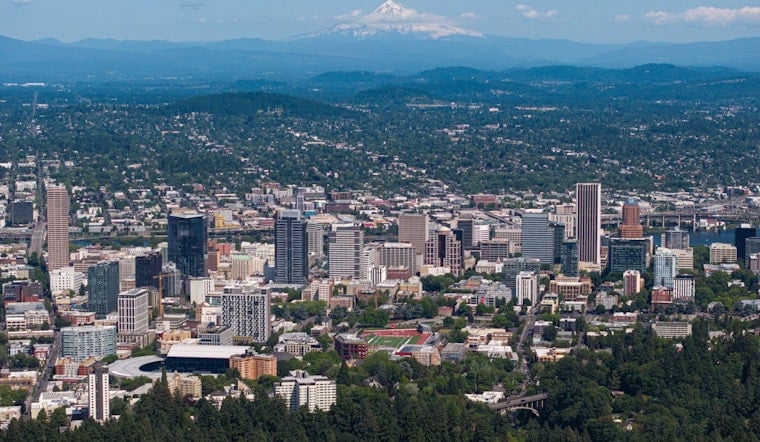
Portland’s simmering fight over what to do with all that empty office space just kicked up a notch. Landlords are blasting City Hall after officials agreed to study a possible vacancy tax, warning that any penalty on unused buildings could push owners to sell off properties or pull their money out of town rather than absorb a new charge. Developers and property managers argue they are already squeezed by weak demand, higher borrowing costs and pricey tenant-improvement bills, and say one more line item on the ledger could be the last straw. A wonky budget note has quickly turned into a noisy debate over whether a vacancy tax would clean up blighted properties or simply speed up divestment from the city.
Survey Finds Industry Alarm
According to the Portland Business Journal, a survey from Portland State University's Center for Real Estate found many local commercial real estate respondents saying a vacancy fee would hurt future investment in Portland. The poll was designed to probe why owners leave space empty in the first place and what, if anything, might persuade them to fill it. Those findings have given shape to opposition from major downtown landlords and industry groups that see the proposal as a direct threat to new capital.
Landlords Say a Tax Would Chase Capital Away
Developers and large owners insist a vacancy tax would pour gasoline on an already tough financing environment. “I don't think vacant properties are the issue at all. The lack of demand is the issue,” Downtown Development Group's Greg Goodman told Willamette Week, calling the whole concept “beyond ridiculous.” Other owners point to multimillion-dollar tenant-improvement commitments and loans underwritten on pre-pandemic rent assumptions as very real constraints on how fast they can backfill space, even if they wanted to.
Market Numbers Back the Concern
Portland’s office market is still carrying a serious load of empty space, and landlords say that makes aggressive rent cuts a lot harder. Cushman & Wakefield’s Q1 2026 report pegs overall office vacancy at roughly 24.1 percent, with some downtown pockets running much higher. Those numbers help explain why certain buyers have scooped up buildings at major discounts while others are choosing to hold on and ride out the storm.
How the Policy Got on the Table
The vacancy-tax idea started life as a budget note last year from City Councilor Sameer Kanal, who asked staff to model a potential fee on vacant property. Council President Jamie Dunphy and Councilor Candace Avalos signed on to that request, Willamette Week reports. The city then hired ECOnorthwest for roughly $62,000 to study what a tax might look like and how much money it could raise, while PSU's Center for Real Estate was tasked with surveying owners and brokers. City leaders maintain that the research is meant to lay out options, not to flip a switch on an immediate new tax.
Precedent and Legal Questions
Vacancy taxes are still relatively uncommon and their track record is mixed, according to the Institute on Taxation and Economic Policy. The group’s review points to experiments in Vancouver, Oakland and San Francisco, and notes that the results depend heavily on the fine print, including how “vacant” is defined, which exemptions are allowed and where the revenue ultimately goes. Those design choices now sit at the heart of Portland’s argument over whether a vacancy tax would be a precision tool or a blunt instrument that chills investment.
What’s Next for Portland
City staff are expected to receive ECOnorthwest’s analysis and PSU’s survey results in the coming weeks, and leaders could use that information to draft vacancy-tax language or decide to shelve the idea, according to the Portland Business Journal. Supporters argue that a carefully targeted fee could nudge long-empty properties back into productive use and help revive struggling blocks. Critics counter that if City Hall gets the details wrong, a vacancy tax could push more owners to sell, or steer future investment to other metro areas instead. Before anything hits the books, residents can expect a round of committee hearings and public comment, followed by what is likely to be a closely watched council vote.





