

























































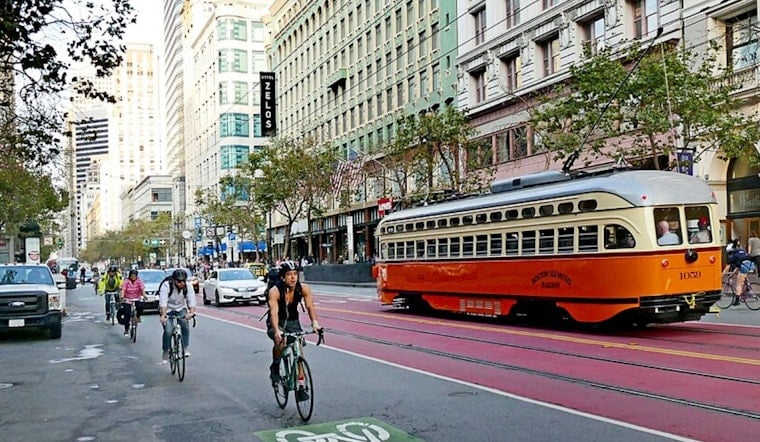
San Francisco cyclists got an abrupt reality check this week when police officers staged a sudden, high-visibility ticket blitz at Powell and Market, zeroing in on people riding bikes, scooters and a moped. During a short morning operation, officers stopped and cited multiple riders, prompting immediate backlash from cyclists and advocates who argue the real danger comes from drivers behind the wheel of cars. The crackdown follows the city’s renewed focus on a new high-injury traffic map and the Street Safety Act.
According to the San Francisco Chronicle, officers issued tickets to a group that included about a dozen cyclists, a skateboarder and an e-scooter rider at the busy Powell and Market intersection. SFPD spokesperson Evan Sernoffsky told the Chronicle, "We are using the information to do high visibility traffic stops all over the city, which involves anything that could lead to an injury or fatality." The operation was connected to a recently released high-injury map that is supposed to guide both enforcement and safer-street investments.
High-injury map and the policy shift
The enforcement blitz is tied to the city’s renewed focus on a high-injury network, a relatively small share of street miles where a large portion of severe and fatal crashes occur, and to the Street Safety Act, which directs engineering fixes and enforcement to those corridors. Coverage by KQED and the San Francisco County Transportation Authority outlines how the city is leaning on targeted enforcement as one piece of a multiagency strategy to cut traffic deaths. Transportation officials note that most severe injuries involve motor vehicles, and say concentrating efforts on high-injury locations is where they expect the biggest safety payoff.
What a ticket can mean
In California, the base penalty for failing to stop at a solid red light is set at $100 by state law, but mandatory assessments and local fees usually inflate the final bill considerably. The state legislative record establishes the base fine for the core red-light offense, while courts and county fee schedules are what push the total higher. For riders cited on the street, that can translate into a pricey ticket for behavior many cyclists consider part of everyday commuting.
Advocates worry that the new emphasis on enforcement could land hardest on people simply trying to get to work, rather than on the driver behaviors that lead to the worst crashes. Data and analysis used by local agencies, including the Transportation Authority’s planning reports, show that a disproportionate share of severe and fatal collisions occur on a relatively small set of corridors. Planners say that engineering changes, paired with driver-focused enforcement, should remain at the center of the city’s approach. How officials balance ticketing with infrastructure upgrades and driver enforcement will determine whether this strategy actually reduces injuries or just reshuffles who gets pulled over.
For now, officers describe the Powell and Market operation as the opening round of tactical deployments guided by the high-injury map, and riders in the downtown core are watching closely to see whether future sweeps land as heavily on drivers as on micromobility users. Expect continued scrutiny from advocates and the Board of Supervisors as the city rolls out its enforcement plans and tracks whether crash numbers fall on the corridors it has labeled highest risk.



.jpg)